Travel smart in San Francisco: plan neighborhood-based itineraries so you minimize transit time and maximize experiences; use Muni and BART, get a Clipper card, and walk or bike across the Golden Gate when weather allows. Time your visits to avoid peak fog mornings, book Alcatraz and restaurants in advance, layer clothing for microclimates, and focus on one or two neighborhoods per day to savor cuisine, museums, and iconic sights without rushing.
Key Takeaways:
- Buy a Clipper card and rely on Muni, BART, and cable cars-avoid driving when possible due to steep hills and limited parking.
- Reserve Alcatraz and other popular tours ahead of time; visit Golden Gate and waterfront spots early to beat fog and crowds.
- Dress in layers and pack a windproof jacket-microclimates make weather changeable across neighborhoods.
- Explore diverse districts (Mission, North Beach, Chinatown, Hayes Valley) for food and culture, and stay in well-lit areas after dark.
- Budget for higher restaurant prices and tip 15-20%; use contactless payments for convenience and faster service.
Key Attractions
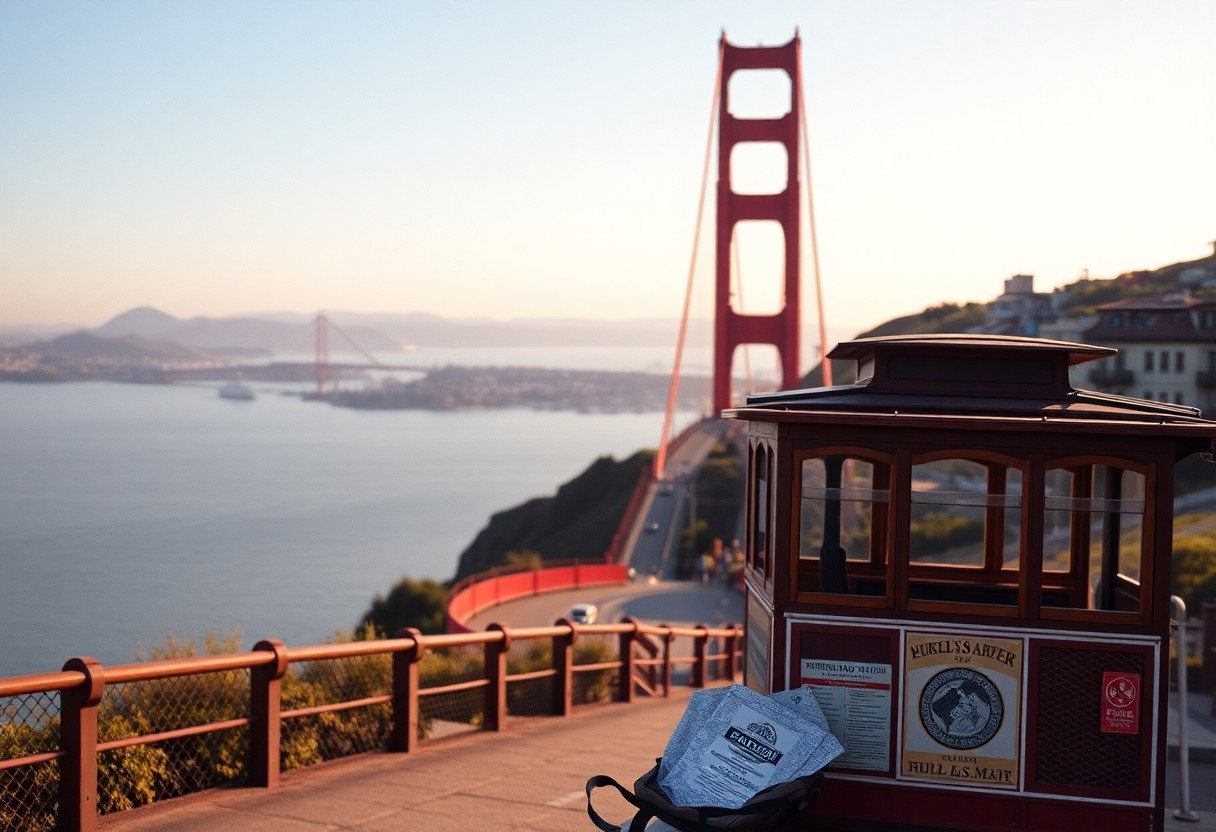
You’ll hit a mix of must-sees and neighborhood favorites: Golden Gate Bridge (main span 4,200 ft), Alcatraz tours from Pier 33 that often sell out weeks ahead, the Ferry Building Marketplace with dozens of artisan vendors and farmers markets, and three historic cable car lines-Powell-Hyde offers the best skyline views. Plan timing: mornings for bridges and late afternoons for Painted Ladies at Alamo Square to catch the light and avoid peak crowds.
Iconic Landmarks
You should prioritize Golden Gate viewpoints and consider biking the 1.7-mile span, book Alcatraz early from Pier 33, ride the Powell-Hyde cable car for classic city-to-water panoramas, and photograph the Painted Ladies at Alamo Square. Sample Fisherman’s Wharf staples-try clam chowder in a Boudin bread bowl-and explore the Ferry Building’s artisanal stalls for local cheese, chocolate, and sourdough.
Hidden Gems
You’ll find quieter wonders like the Wave Organ (best at high tide), the 163-step 16th Avenue Tiled Steps, the Seward Street Slides for a playful ride, and the Sutro Baths ruins with nearby sea caves. Many are free or low-cost and far less crowded before noon, giving you authentic neighborhood character without long lines.
To see them efficiently, start early: take Muni or the 38R to Lands End and follow the roughly 1.5-mile trail to Sutro Baths, then head to the Cliff House Camera Obscura. Use the 22 or 33 buses to reach the Wave Organ and check tide charts for optimal sound. Bring a piece of cardboard for Seward Street Slides and pair the 16th Avenue Steps with a coffee in the Inner Sunset to break up climbs.
Transportation Tips
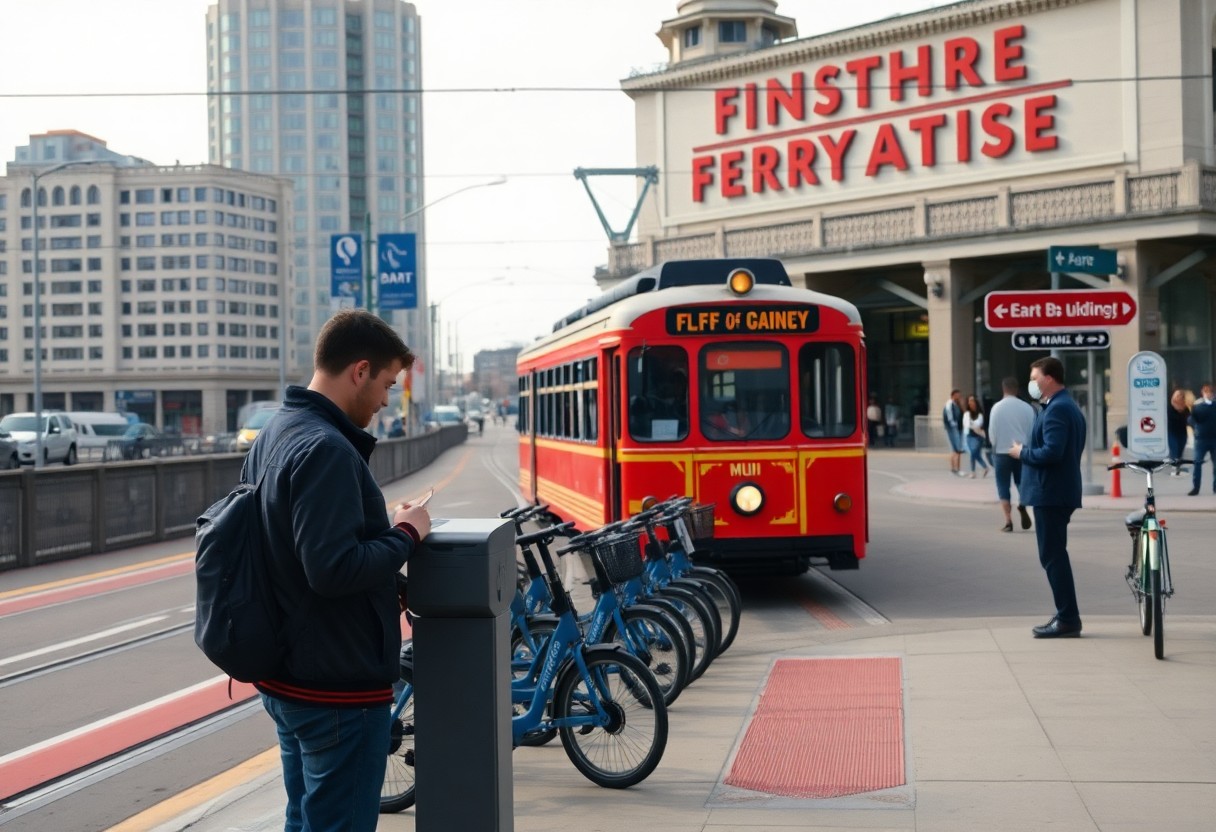
Mix public transit, walking, and rideshares to cover the city efficiently – Muni handles neighborhood routes, BART links the airport and East Bay, and cable cars are handy for short tourist runs. Assume that rush hours (roughly 7-9am and 4-7pm) routinely add 20-40 minutes to cross‑town drives, so buy a Clipper card or use MuniMobile to save time and transfer seamlessly.
- Carry a Clipper card or set up the mobile Clipper app to use Muni, BART, Caltrain and ferries without cash.
- Use MuniMobile and BART apps for real‑time arrivals; many lines run every 6-12 minutes off‑peak.
- Reserve garage spaces via SpotHero or ParkMobile to avoid unpredictable $30-60 daily lot rates.
- Use rideshares late at night when transit frequency drops; factor surge pricing into your budget.
- Assume that parking signs, permit zones and street‑cleaning rules are strictly enforced – check SFMTA before you park.
Navigating Public Transit
You should rely on Muni (buses and light rail), BART and ferries for most trips: load a Clipper card or buy a 1/3/7‑day Visitor Passport for unlimited Muni rides, and use MuniMobile for tickets. Cable cars cost about $8 one‑way and are best for short routes like Powell‑Market to Fisherman’s Wharf; BART from downtown to SFO takes roughly 30 minutes. Check live apps for detours during events and expect service every 6-12 minutes on core routes.
Driving and Parking Advice
Driving exposes you to steep hills, narrow one‑way streets and dense traffic; plan routes with GPS and avoid peak commutes. Street meters typically run $2-7 per hour and downtown garages often charge $30-60 per day – booking ahead via SpotHero or ParkMobile usually saves money. Permit parking dominates many residential blocks, so consider rideshares or transit for evenings and short visits to busy areas like Fisherman’s Wharf.
Planning parking means checking signs: street‑cleaning tow windows are enforced early mornings and fines plus towing can exceed $100. Many garages list height limits (often 6’4″-6’8″) and may add charges for oversized vehicles; event days can double rates. You should scout EV chargers in SoMa and the Marina if driving electric, and use SFMTA’s online maps to pre‑check restricted blocks and permit zones.
Local Cuisine
You’ll move between seafood counters, taquerias, and bakeries as neighborhoods shape your meals: North Beach’s Italian roots, the Mission’s Mexican influence, and Chinatown’s Cantonese traditions. Expect sourdough tang from local wild yeasts, Dungeness crab when in season (typically Nov-Jun), and a strong farm-to-table scene concentrated around the Ferry Building’s vendors and weekend market that draws locals and tourists alike.
Must-Try Dishes
You should order cioppino for a true Bay flavor, sourdough sandwiches or bowls for the city’s signature tang, a Mission-style burrito for hearty street fare, and dim sum in Chinatown for classic small plates; don’t miss Dungeness crab in season. Each dish ties to a neighborhood-trying all gives you a quick culinary map of the city’s history and immigrant influences.
Recommended Restaurants
You’ll find standout examples across neighborhoods: Tartine for breads and pastries, Swan Oyster Depot for counter-serve seafood, La Taqueria or El Farolito in the Mission for burritos, Hog Island Oyster Co. at the Ferry Building for oysters, and House of Prime Rib for an old-school San Francisco steakhouse experience.
Plan to arrive early at counter-style spots like Swan Oyster Depot and Hog Island, since seating is limited and waits build by midday; reserve where possible for places like House of Prime Rib. Use the Ferry Building to sample multiple vendors in one visit, hit the Mission midday for taquerias, and book dinner in North Beach or the Marina in advance on weekends to avoid long waits.
Cultural Experiences
Wandering San Francisco’s cultural map puts you in vibrant Chinatown, the mural-rich Mission District, and Japantown within hours; you can trace Gold Rush-era history in Chinatown, spot 30+ murals on Balmy Alley, and sample 20+ taquerias along Mission Street. Dive into live music at intimate venues in the Fillmore or catch a classical performance at Davies Symphony Hall, and use MUNI or BART to move quickly between neighborhoods so you fit more in without wasting time hunting parking.
Festivals and Events
From Outside Lands in Golden Gate Park each August-spanning three days and drawing roughly 200,000 attendees-to SF Pride in June through the Castro, you can time visits around marquee events: Chinese New Year parades in February, Carnaval in May, and the SF International Film Festival every April. Buy tickets early for headline acts, arrive midday to avoid rushes, and use shuttle or transit options to skirt long event queues and limited parking.
Museums and Galleries
Museums like SFMOMA, with its post-2016 expansion housing roughly 33,000 works, the Asian Art Museum’s ~18,000-object collection, and the Exploratorium’s 600+ hands-on exhibits give you diverse options; you can spend a morning at de Young for American art and skyline views, then an afternoon at the Legion of Honor for classical European pieces and Rodin sculptures.
Plan visits around timed-entry tickets-many institutions offer them-and prioritize must-sees: reserve SFMOMA for modern/photography highlights, the Asian Art Museum for historic ceramics and Buddhist sculpture, and the Exploratorium for interactive science if you’re with kids. Arrive early on weekdays to avoid crowds, check for combined passes or evening hours, and factor 2-3 hours per major museum to explore without rushing.
Outdoor Activities
You can pack your days with active options: bike the roughly 8-10-mile route across the Golden Gate Bridge to Sausalito, hike 2-6 mile trails in the Presidio, or spend an afternoon in the 1,017-acre Golden Gate Park visiting the Conservatory of Flowers and Stow Lake. Local rental shops loan bikes, picnic gear, and give guided options so you maximize time and avoid parking headaches.
Parks and Nature
Walk coastal bluffs at Lands End, spot harbor seals from Crissy Field, and lose yourself in Muir Woods’ old-growth redwoods about 16 miles north. You can follow short 1-3 mile loops for Golden Gate views or link trails into a 4-6 hour route combining Baker Beach and Lands End; visitor centers provide trail maps and transit guidance.
Coastal Adventures
Paddle under the Golden Gate on a guided kayak tour, book a 2-3 hour sailing cruise from Fisherman’s Wharf, or watch the Pier 39 sea lions up close. You should account for 50-58°F bay water, frequent fog, and afternoon winds-pack layers, a windbreaker, and waterproof shoes. Popular tours fill weeks ahead in summer.
Guided sea-kayak tours typically last 2-3 hours and cost $60-$120, departing from Fisherman’s Wharf or Sausalito; the ferry to Sausalito takes about 30 minutes. Commercial sailing cruises often run 60-90 minutes with fares starting around $75 per person. Operators provide PFDs and tide/current briefings-if you go independently, check currents, wear a wetsuit, and book 1-2 weeks ahead in summer.
Accommodation Options
Where to Stay
Union Square suits shoppers and theatre-goers while Fisherman’s Wharf puts you steps from piers; central hotels typically run $200-$350 per night. If you prioritize food and nightlife, base yourself in the Mission or North Beach, and choose SoMa for convention access and tech vibes. Use BART and Muni to bridge neighborhoods-staying near a Caltrain or BART station cuts transit hassles and maximizes the time you have for sights and dining.
Budget-Friendly Choices
Hostels such as HI San Francisco Downtown and Samesun offer dorm beds from $30-$60 nightly, while private Airbnb rooms and budget motels in Outer Sunset, Richmond or Daly City commonly fall in the $80-$150 range. Weekday stays and booking 30-45 days ahead often shave 10-30% off rates, and choosing a place near a Muni or BART stop keeps you connected without paying central San Francisco prices.
Staying 1-2 miles outside the core can save $50-$100 per night and still get you downtown in about 15-20 minutes by BART from Daly City or 20-30 minutes by Muni from Outer Sunset; weekly or extended-stay rates lower costs further. Consider pod hotels, co‑living spaces like PodShare, and loyalty-program redemptions, and verify transit times to your planned activities so savings don’t cost you extra commute time.
Summing up
On the whole, you can maximize your San Francisco visit by planning for microclimates, using public transit and ride-shares, prioritizing neighborhoods like the Mission, North Beach and the Presidio, booking popular attractions in advance, sampling diverse cuisine, and pacing activities to allow time for spontaneous discoveries that make your trip uniquely rewarding.
FAQ
Q: When is the best time to visit San Francisco for good weather and fewer crowds?
A: Late spring (May-June) and early fall (September-October) offer the most reliably mild weather and thinner crowds; September and October are often the warmest and clearest months. Weekdays are less busy at major sites, and early mornings are best for photo-friendly light and shorter lines. If you want to avoid fog at the coast, plan outdoor sightseeing for late morning-afternoon when the sun often breaks through.
Q: How can I get around San Francisco efficiently without a car?
A: Use a Clipper Card or contactless payment across Muni buses, light rail, cable cars (fare applies), and regional transit. BART connects the city to SFO, OAK and East Bay. Cable cars are iconic but slow and touristy-use them for the experience and take buses or rideshares for efficiency. Walk or bike in flatter neighborhoods; bike paths are good along the Embarcadero and Golden Gate Bridge approaches. For day trips (Muir Woods, Napa) consider organized tours or rent a car for the day to avoid parking hassles in the city.
Q: Which neighborhoods and attractions should I prioritize on a short trip?
A: Prioritize Golden Gate Bridge and Presidio viewpoints, Alcatraz (book tickets weeks ahead), Fisherman’s Wharf/Pier 39 for sea lions and bay views, the Ferry Building Marketplace for food, Chinatown and North Beach for culture and dining, and Golden Gate Park for outdoor time. If you have extra time, add the Mission District for murals and Mexican cuisine, Haight-Ashbury for vintage shops, and Twin Peaks for panoramic city views. Group nearby sites into single days to minimize transit time.
Q: What should I pack and how do I handle San Francisco’s microclimates?
A: Pack layers: a lightweight base, insulating mid-layer, and a windproof/water-resistant outer layer. Bring a warm hat and scarf for windy waterfronts and a small umbrella for light rain. Comfortable, broken-in walking shoes are vital for hills and uneven sidewalks. Sunscreen and sunglasses are useful because sun can be strong when the fog clears. Carry a reusable water bottle and a portable phone charger for long days out.
Q: How can I save money, eat well, and stay safe while visiting?
A: Save with CityPASS or Go City if you plan multiple paid attractions, and use Clipper for transit to avoid multiple single fares. Eat like a local at food trucks, market stalls (Ferry Building), and neighborhood taquerias for value and quality. Tipping for table service is typically 15-20%. Avoid leaving valuables visible in cars, stay aware of surroundings at night, and keep valuables in front pockets while on crowded transit. Prebook high-demand activities (Alcatraz, popular tours) to secure lower prices and availability.