This insider guide shows you what flight attendants notice about your carry-on, how your packing and boarding habits affect the crew and fellow passengers, and which small adjustments will make your travel smoother; you may wince at what you learn, but you’ll walk away with clear, practical tips that keep you from being “that passenger” and make flying easier for you and everyone around you.
Key Takeaways:
- Flight attendants notice size and overpacking-oversized or stuffed carry-ons slow boarding and create extra work.
- Efficient packing and smart use of under-seat space earn quiet approval and make boarding faster.
- Gate-checks and last-minute attempts to cram bags into bins are the most embarrassing moments; we handle them all the time.
- Politeness and teamwork-helping lift, using bins correctly, and following space etiquette-make a big positive impression.
- We worry most about safety and prohibited items; the rest invites mild judgment but is usually tolerated, which fuels that can’t-resist curiosity.
Understanding Carry-On Types
You’ll spot three practical categories on board: standard carry-ons that live in the overhead bin, personal items that must fit under the seat, and oddball pieces (strollers, instruments, sports gear) that get special handling; most U.S. carriers set standard bags at 22 x 14 x 9 in (56 x 36 x 23 cm) while personal items hover around 18 x 14 x 8 in (45 x 35 x 20 cm), and your choices directly affect boarding speed and how flight attendants manage cabin flow.
- Standard carry-on: overhead bin, rigid or soft shell.
- Personal item: under-seat, laptop bag, small backpack.
- Oversized/special: gate-checked or checked for a fee on many routes.
| Type | Typical size/notes |
| Standard Carry-On | 22 x 14 x 9 in (56 x 36 x 23 cm); overhead bin |
| Personal Item | 18 x 14 x 8 in (45 x 35 x 20 cm); fits under seat |
| Gate-Checked | Often free for bulkier items; expect delays retrieving at gate |
| Budget Carrier Limits | Some carriers (e.g., ultra-low-cost) restrict sizes more tightly – check before you fly |
Standard Carry-On Luggage
When you grab a 22 x 14 x 9-inch spinner, you’re choosing the workhorse of carry-ons: most U.S. airlines accept it, it holds 7-10 days of clothes if you pack efficiently, and hard shells protect fragile items; flight attendants judge overstuffed bags quickly because they jam overheads, so compressible packing cubes and a dedicated laptop sleeve make you faster at stowing and reduce gate-check risk.
Personal Items and Backpacks
You should treat your personal item as mission‑critical: it must slide under the seat and hold your laptop, meds, and a 100‑ml liquids bag; backpacks often become a second carry-on when full, so keep dimensions in mind-an under‑seat fit prevents mid‑boarding conflicts and keeps importants accessible during turbulence or delays.
Thou prioritize placing electronics, prescription meds, travel documents and a small liquids pouch in your personal item so you can access them quickly during delays and gate holds, and if you pack a backpack, consolidate chargers and one outfit to avoid having to rummage through overhead bins while others wait.
Tips for Choosing the Right Carry-On
You want a bag that fits the airline’s bin, slides into overhead space, and lets you retrieve importants without turning the aisle into a traffic jam; aim for a soft-sided 22 x 14 x 9 inch bag for most U.S. carriers, pick spinners for tight gates, and choose pockets that separate chargers, documents, and a quart-sized liquids bag so security and boarding move faster.
- Measure your bag before you fly-22 x 14 x 9 in is the common U.S. guideline; personal items are often ~18 x 14 x 8 in.
- Weigh your packed carry-on at home; many international carriers enforce 7-12 kg limits even if U.S. airlines don’t.
- Pick soft-sided if you might gate-check: it compresses and slides into tight overhead bins better than a rigid shell.
- Use packing cubes and an easy-access pocket for chargers, passport, meds, and snacks to avoid unloading at the gate.
Size and Weight Restrictions
Most U.S. airlines list 22 x 14 x 9 inches as the maximum for a carry-on and about 18 x 14 x 8 inches for a personal item; international carriers often add weight caps-commonly 7-12 kg-so you should check the specific airline policy, measure your bag, and weigh it full to avoid last-minute gate checks or repacking under pressure.
Packing Essentials
Prioritize your travel documents, medications, phone and laptop chargers, a compact toiletry kit following the 100 ml/3.4 oz rule, a spare pair of underwear, noise-cancelling earbuds, and a lightweight scarf or sweater for fluctuating cabin temperatures so you can stay comfortable and self-sufficient without digging through a packed overhead bin.
Organize items between your personal item and carry-on so you can access documents and electronics quickly; keep liquids in a clear quart-sized bag, limit power banks to under 100 Wh (20,000 mAh is usually safe), stow sharp items out of reach, and place heavier objects low and centered to prevent your bag from toppling when you pull it down from the bin.
The easiest way to avoid boarding drama is to pack smart, weigh your bag, and make sure it actually fits the bin before you step onto the plane.
Step-by-Step Guide to Packing Efficiently
| Quick Plan |
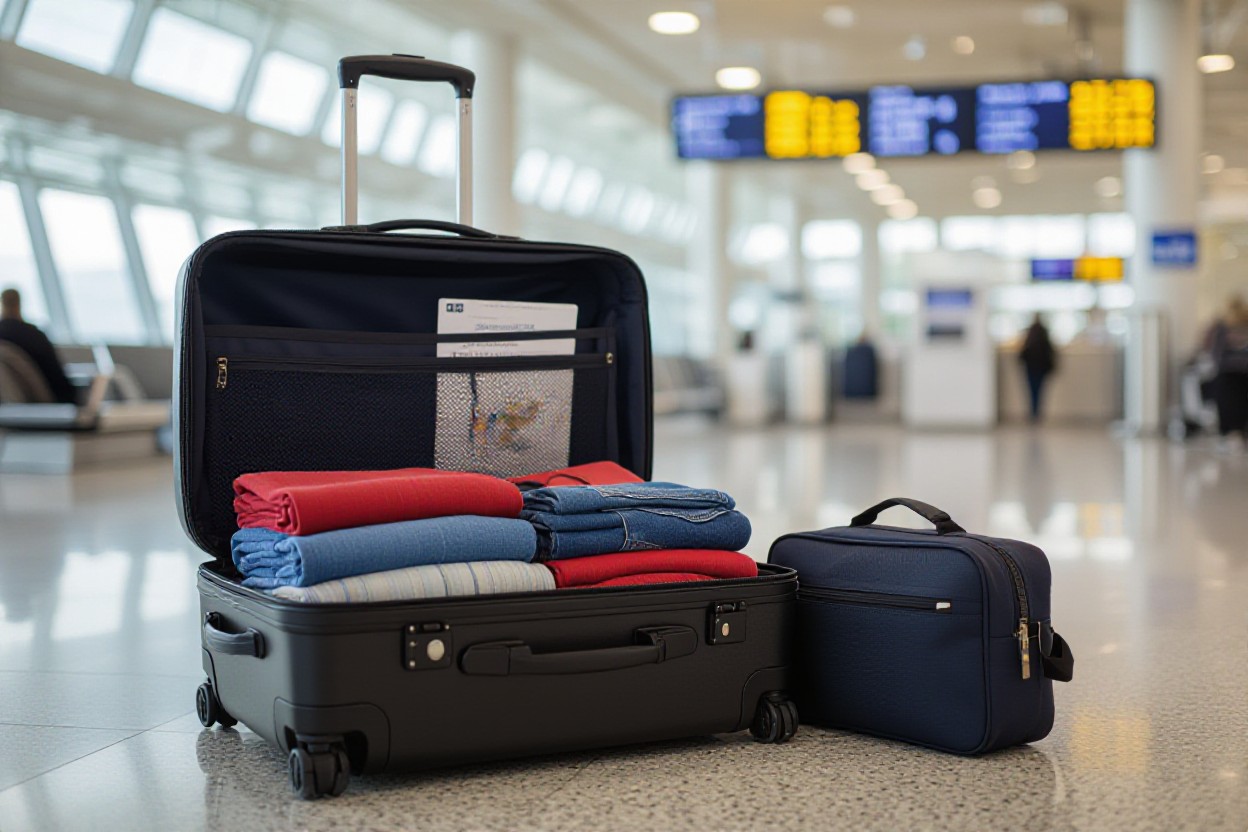
Start by listing 3-4 outfit bases, then group items into two packing cubes (tops and bottoms); reserve a third for underwear and socks. Pack shoes in a thin shoe bag and tuck chargers, meds, and toiletries into a 1‑quart clear bag to meet TSA’s 3-1-1 rule. Aim to fill gaps with soft items like socks to stabilize load and keep your carry-on under the airline’s linear limits. |
Rolling vs. Folding Clothes
For casual clothes, rolling typically saves about 15-25% space and reduces loose wrinkles, so roll tees, sweatshirts, and chinos; fold structured pieces such as blazers and dress shirts along the seams or use a packing folder to keep collars crisp. You’ll find rolling takes 2-3 seconds per item, making it fast during tight boarding prep, while a couple of folded dress items can sit flat on top to avoid creases.
Utilizing Space Wisely
Use every cavity: stuff socks and belts into shoes, slip a travel umbrella along the suitcase spine, and place heavier items near the wheels to balance weight. A single compression bag can shrink a bulky sweater by up to 50-70%, freeing room for an extra pair of shoes or a small duty-free purchase without bulging the bag.
Also pack by priority: put the items you’ll need first (meds, headphones, boarding pass) in the top or outer pocket so you don’t dump the whole bag. For electronics, nest chargers and adapters in a padded pouch and place it between cubes to cushion breaks; weigh your packed carry-on – many airlines enforce a 7-10 kg limit for strict cabins, so swapping one heavy item for a lightweight layer can keep you compliant and avoid gate drama.
Factors Influencing Flight Attendant Perceptions
Flight attendants weigh practical signals-how your bag fits the overhead, how often you rummage, and whether your items threaten bin space or safety. They note concrete cues like bulging zippers, visible liquids, or bags that need two people to lift, and keep mental tallies of passengers who repeatedly ask for help. Operational delays from one oversized or awkwardly packed bag ripple through boarding times. This often results in a polite intervention, gate check, or a pointed request to repack.
- Size and shape relative to standard bins (approx. 22″×14″×9″)
- Organization and visible loose items
- Weight and center-of-gravity
- Accessibility of vitals (meds, documents, electronics)
- Odors or leaking containers
- Fragile or irregularly shaped contents
Appearance and Orderliness
You make an immediate impression when your carry-on looks orderly: zipped compartments, labeled pouches, and cables stashed away signal efficiency. Flight attendants flag open food containers, dangling straps, or bulging pockets because they slow boarding and increase the chance of spills; examples include a half-open toiletry kit or a shoulder bag stuffed 20-30% past its seams. A neat bag often means fewer gate checks and quicker bin placement during a full flight.
Weight Distribution
How you spread weight changes whether your bag slides neatly into the bin or tips and needs two hands; heavy top-loading causes awkward lifts and extra crew effort. Many international carriers limit carry-ons to about 7-10 kg (15-22 lb), so placing dense items like shoes and liquids at the base keeps the center of gravity low and electronics cushioned near the lid. Balanced packing reduces strain on attendants and lowers the likelihood of your bag being asked to gate-check.
For better balance, aim to place roughly 60% of the bag’s mass low and centered, leaving the top lighter and pliable-think shoes, toiletry bottles, and spare chargers at the bottom, with clothing and soft items above. Use compression cubes to distribute weight evenly, wrap fragile items in soft clothing, and split heavy loads across two smaller bags when possible; these tactics make your bag easier to lift, reduce crew handling time, and cut the chance of damage or gate checks.
Pros and Cons of Common Carry-On Choices
Here are the practical trade-offs flight attendants notice most: durability versus flexibility, maneuverability versus weight, and expandability versus overhead-bin friendliness. You’ll see concrete numbers – 22″ hard shells often weigh 6-9 lb, soft shells 4-7 lb, spinners add ~0.5-1 lb – and real examples to guide your pick based on gate types, walking distance, and how often you gate-check.
| Pros | Cons |
|---|---|
| Hard-shell: excellent impact protection for electronics and souvenirs | Hard-shell: less give in tight bins, often heavier (6-9 lb for 22″) |
| Soft-shell: expandable + exterior pockets for quick access | Soft-shell: less crush protection, can look overstuffed in bins |
| Spinner wheels: effortless 360° movement through terminals | Spinner wheels: can snag in narrow aisles, slightly heavier by ~0.5 lb |
| Inline/roller wheels: durable on cobblestones and curbs | Inline wheels: require dragging, more strain if you walk far |
| Backpack: hands-free, fits under-seat, ideal for connecting flights | Backpack: less organized packing, can burden your shoulders on long walks |
| Duffel/soft weekender: compressible for tight storage, lightweight | Duffel: poorer structure, items can shift and look disorganized to crew |
| Expandable designs: add ~10-20% capacity for souvenirs | Expandable: risk of airline bin-rejection when fully expanded |
Hard Shell vs. Soft Shell
You’ll favor a hard shell when you carry fragile gear: cameras, laptops, or glass souvenirs survive drops better; expect 6-9 lb for a 22″ polycarbonate carry-on. Soft shells win if you prioritize flexibility – they often weigh 4-7 lb, offer exterior pockets for chargers and passports, and expand 10-20% when you need the extra room. Choose based on how often you gate-check and whether overhead bin fit or impact protection matters more on your routes.
Wheeled vs. Non-Wheeled Options
You pick wheeled bags when distance through airports matters: spinners glide in terminals and reduce shoulder strain, while two-wheel rollers handle rough pavement better. Non-wheeled backpacks keep your hands free and always fit under seats, which helps on crowded regional jets. Match the choice to your typical itinerary – long walks and smooth airports favor spinners; short hops and packed gates favor backpacks.
Digging deeper: spinners (4 wheels) let you move alongside your bag through busy gates, but inline rollers (2 wheels) are more stable on uneven surfaces and often have lower center-of-gravity, reducing tipping. Spinners add roughly 0.5-1 lb and can be trickier to slide into crowded overheads; if you routinely walk >1,000 yards between connections, a wheeled bag beats carrying a 20-30 lb backpack, whereas urban trips with lots of stairs may make non-wheeled options faster.
Frequent Mistakes Travelers Make
Overpacking
You cram every extra layer, souvenir, and half-used toiletry into your bag, making it rigid and awkward to slide into overhead bins. A stuffed 22 x 14 x 9-inch roller can take 20-30 seconds longer to stow; multiplied over a full boarding, those delays cascade and flight attendants start gate-checking or insisting you repack.
Ignoring Airline Policies
You assume airlines won’t enforce size limits, but many list 22 x 14 x 9 inches as their carry-on maximum and gate agents routinely measure bags. Budget carriers often allow only one personal item; adding a larger carry-on at the gate can cost $40-$60, leaving you scrambling to pay or check items if you’re unprepared.
You should also follow TSA’s 3-1-1 liquids rule: 3.4 oz (100 mL) containers in a single quart-size bag, one per passenger-excess gets discarded at security. Loose batteries and oversized cases may be pulled for inspection or gate-checked, which increases the risk of damage or delays to your itinerary.
Final Words
To wrap up, you should know that flight attendants notice your carry-on more than you think; they appreciate efficiency, safety, and consideration, and quietly judge overpacked, blocked aisles, or oversized bags. If you prioritize compactness, clear labeling, and quick stowage, you make everyone’s job easier and reduce awkward moments. The insider view is mildly embarrassing yet addictive-you’ll want to adjust your habits once you realize how much a small change improves the cabin experience.
FAQ
Q: What do flight attendants really think when you try to cram an oversized carry-on into the overhead bin?
A: They’re thinking about timing, safety and who’s going to unblock the aisle. An oversized bag slows boarding, risks getting stuck, and can shift in flight. If they help you, it’s on-the-clock assistance; if they ask you to gate-check it, it’s not personal-it’s about fit and keeping boarding on schedule. Best move is to lift gently, turn wheels or handles inward, or accept gate-checking without argument.
Q: How do attendants feel about personal items that spill into the aisle or overfill the underseat space?
A: It reads as thoughtless because obstructed aisles and inaccessible lifejackets create safety and service problems. Tangled headphone cords, open grocery bags, or shoes strewn under seats cause delays and minor hazards during turbulence. Pack tightly, tuck straps in, and place soft items fully under the seat so crew can move and passengers can exit without a tangle.
Q: What’s their reaction to passengers bringing odd or bulky things as carry-ons-musical instruments, pots, or oversized duffels?
A: They nod with mixed sympathy and irritation. Small instruments or oddly shaped items are manageable if soft-sided or if the passenger is willing to buy a seat; hard cases and large duffels often need gate-checking. Pets trigger extra paperwork and attention; bulky items that invade other passengers’ space are the quickest way to draw a frown. Soft-sided bags, collapsible packing, or pre-checking large pieces avoids the awkwardness.
Q: How do attendants view people who “reserve” overhead space for later or stash items in the wrong row?
A: They see that behavior as rude and disruptive. Bags left above the wrong row create confusion for boarding and can cause disputes at the gate. Crew will usually ask the owner to move it; if no one claims it, it may be relocated or checked. Stashing items in the nearest available bin and labeling or keeping smaller items under your seat prevents conflict and speeds up deplaning.
Q: What do flight attendants think about carry-ons with messy, smelly, or hazardous contents-food, leaking liquids, batteries?
A: Their priority is passenger comfort and safety. Strong odors and leaks draw complaints and complicate cleaning; spilled liquids can damage electronics and create slip risks. Lithium batteries should be packed in carry-on with terminals protected; oversized liquids bypass security and will be flagged. Seal food and toiletries, use leak-proof bags, and be prepared for crew to ask you to contain or stow problematic items.