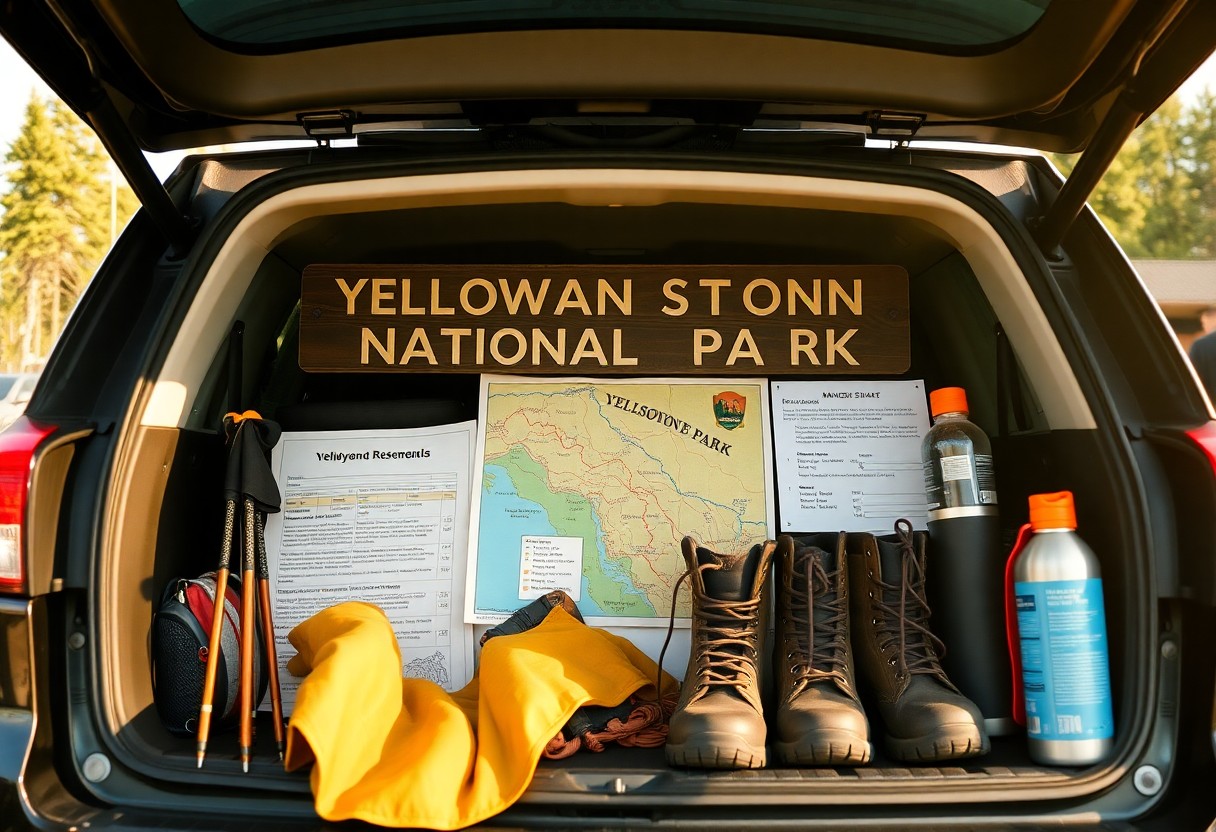
Travel prepared to Yellowstone by using top travel tips that will give you practical strategies for timing visits, staying safe around wildlife and thermal areas, choosing optimal trails and lodging, and navigating park logistics; these tactics let you spend less time waiting and more time experiencing Old Faithful, the Grand Canyon of the Yellowstone, and remote geyser basins with confidence and local-level knowledge.
Key Takeaways:
- Plan and book early – secure lodging or campsites, buy passes, and check road and seasonal closures before you go.
- Time your days to beat crowds and see wildlife – aim for early morning or late evening and explore lesser-known areas.
- Prioritize safety and etiquette – keep a safe distance from animals (at least 100 yards for bears/wolves, 25 yards for other wildlife) and follow park rules.
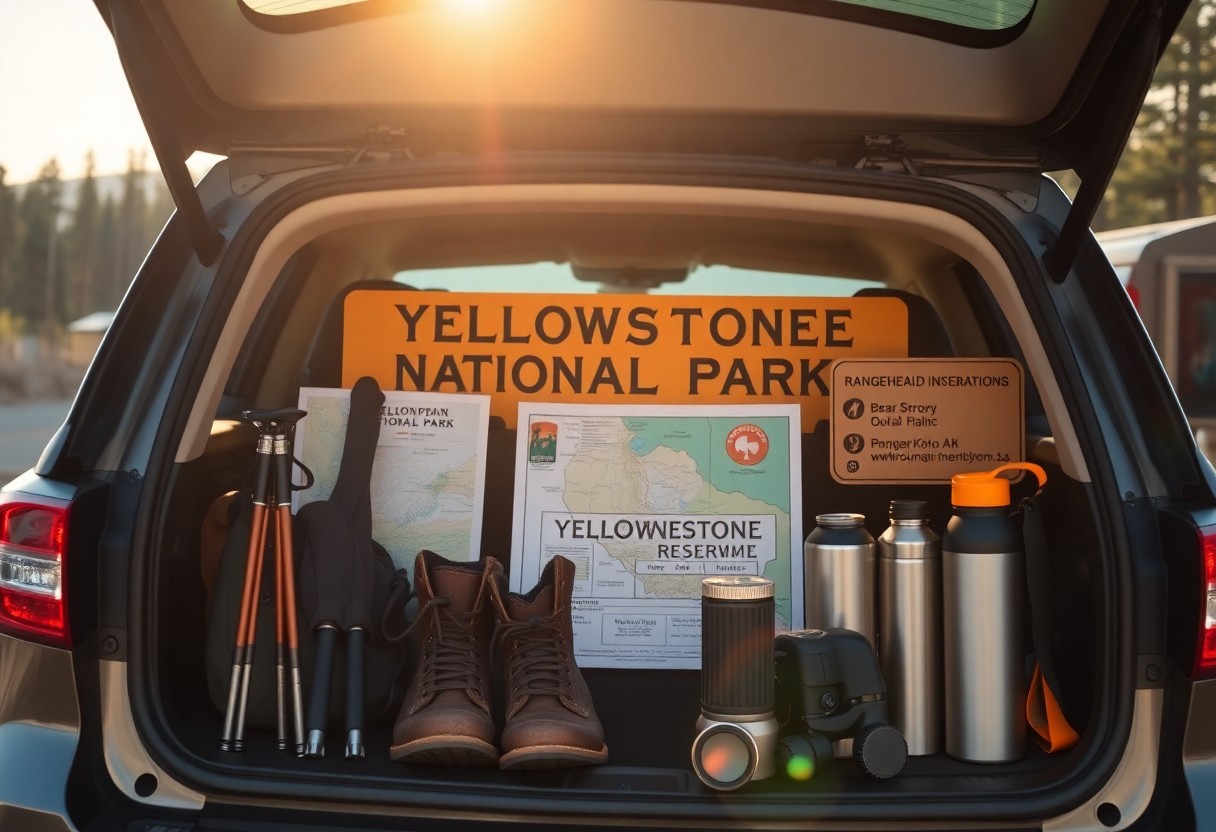
- Pack for variable conditions – layers, sturdy footwear, plenty of water and snacks, bear spray, a physical map, and basic first-aid supplies.
- Use park resources – attend ranger programs, follow boardwalks around thermal areas, check NPS alerts, and practice Leave No Trace.
Planning Your Trip
You’ll need to plan logistics across Yellowstone’s 2.2 million acres – the Grand Loop Road runs roughly 142 miles, so expect hour-plus drives between attractions. Book lodging or campsites 3-6 months ahead for peak summer dates and earlier for Old Faithful or Canyon-area stays. Download NPS maps and offline GPS routes because cell coverage is patchy, and factor in elevation (Old Faithful ~7,350 ft) when pacing hikes and acclimating.
Best Times to Visit
You’ll get fewer crowds and active wildlife in late April-May and September-early October; elk rut peaks in September and fall colors appear then. July-August is the busiest, with entrance delays often 30-60 minutes on weekends. Winter access (December-March) is limited to snowcoaches and snowmobiles, offering quiet, frozen geyser scenes if you join guided trips. Avoid major U.S. holiday weekends to reduce traffic.
Essential Gear and Supplies
You should pack layered clothing, a waterproof shell, sturdy hiking boots, and a warm midlayer for chilly mornings at 7,000+ feet. Carry bear spray in a hip holster, two to four liters of water per person for full-day hikes, sunscreen SPF 30+, a headlamp, binoculars, a topo map or downloaded NPS offline maps, a basic first-aid kit, and an external battery for your devices.
For more detail, prioritize items that address wildlife safety, weather shifts, and limited services: keep bear spray accessible at all times and practice deploying it before your trip; store food in bear-proof lockers at campgrounds and never leave food unattended in vehicles. Bring insect repellent for June-July, traction devices or microspikes for early spring or late fall trails, and paper maps plus a compass – GPS can fail in canyons and dense timber. Plan water resupply points and replenish electrolytes at midpoints on long routes.
Navigating Yellowstone
Park Layout and Key Attractions
You’ll follow the 142-mile Grand Loop Road that connects Old Faithful, Grand Prismatic Spring, Yellowstone Lake, Mammoth Hot Springs and Lamar Valley; each area offers distinct geology, wildlife and viewing patterns. Plan 2-4 days to hit main sights, allow extra time for short hikes, and factor in seasonal road closures and typical summer congestion at popular pullouts.
| Old Faithful Area | Geyser eruptions, Upper Geyser Basin boardwalks |
| Midway/Grand Prismatic | Grand Prismatic Spring viewpoints, hot springs |
| Yellowstone Lake | Largest high-elevation lake in North America, shoreline trails |
| Mammoth Hot Springs | Terraced travertine formations, historic Fort Yellowstone |
| Lamar Valley | Top area for wolves, bison and predator viewing at dawn/dusk |
Types of Transportation Options
You’ll most likely drive your own vehicle along the loop for flexibility, but guided buses and private shuttles reduce parking stress at busy pullouts; biking is viable on quieter secondary roads in summer, while hiking and ranger-led walks cover localized areas. Expect traffic slowdowns near geothermal basins and wildlife jams that can add 20-60 minutes to travel times.
- Personal car: maximum flexibility, but limited parking at peak times
- Guided bus/tour: interpretive guides and reserved stops
- Bicycle: seasonal, requires fitness and road-awareness
- Walking/hiking: best for boardwalks and short trails
- This option can cut parking hassle when you choose shuttles or guided tours
| Personal Vehicle | Best for full-day loops and carrying gear |
| Guided Bus/Shuttle | Good for interpretation and no-parking needs |
| Bicycle | Use on low-traffic roads; helmets required |
| Walking/Hiking | Essential for boardwalks and short-access thermal features |
| Ranger Programs/Private shuttles | Seasonal schedules; book ahead for peak summer |
You can optimize transit by combining modes: drive between distant sectors, then use guided shuttles or walks to cover congested thermal basins; concessionaires like Xanterra run tours and lodging shuttles, and local outfitters offer seasonal e-bike rentals near gateway towns. During July-August weekends plan extra travel time and book tours or shuttles several weeks ahead if you want guaranteed seats.
- Mix driving with short guided segments to avoid parking searches
- Choose shuttle services for popular stops during peak season
- Reserve tours and rentals 2-6 weeks out in summer
- Use early mornings for wildlife viewing to minimize traffic
- This approach balances flexibility with reduced time idling at crowded overlooks
| Drive + Park | Flexible schedule; expect limited parking at famous geysers |
| Guided Tours | Interpretation included; book in advance for summer |
| Shuttles | Less parking hassle; fixed routes and times |
| E-bike/Private Rentals | Available seasonally near West Yellowstone/Gardiner |
| Ranger-led Walks | Free or low-cost, seasonal, great for thermal area insights |
Wildlife Viewing Tips
You should plan visits for dawn or dusk when wildlife is most active, stay in pullouts and scan from a safe distance; follow NPS guidance of 25 yards for bison and elk, 100 yards for bears and wolves. Carry 8-12× binoculars and a 200mm+ lens; use a spotting scope for wolf packs in Lamar Valley. Recognizing aggressive signals-stomping, lowered head, rapid charge-means you need to retreat immediately.
- Maintain NPS distances: 25 yd (bison/elk), 100 yd (bears/wolves).
- Binoculars (8-12×) or a spotting scope help for distant sightings.
- Best viewing hours: roughly 5-9 AM and 5-9 PM; use pullouts, not travel lanes.
Best Practices for Safe Wildlife Encounters
You should stay inside your vehicle when possible; over 90% of safe sightings happen from cars. Speak quietly, avoid flash photography, and never feed wildlife since feeding alters behavior and can lead to fines. If an animal approaches, back away slowly and never position yourself between a calf and its mother-bison have injured people within 10-20 feet. Carry bear spray and practice deploying it before you hike.
Animals to Watch For
You’ll commonly see bison-about 4,000 roam Yellowstone-elk herds often exceeding 10,000 in some seasons, and mule deer along forest edges. Grizzly bears number roughly 700 in the Greater Yellowstone Ecosystem, while wolves total around 100-200 individuals concentrated in Lamar and Hayden Valleys. Also scan riverbanks and cliffs for moose, coyotes, bighorn sheep, bald eagles, and trumpeter swans.
You’ll find bison concentrated in Hayden and Lamar Valleys year-round, with calving in May-June making cows especially protective-give at least 25 yards. Elk rutting (late Sep-Oct) brings bugling and heightened bull aggression near Mammoth and northern valleys. Wolves are most visible on winter mornings on snow-covered plains, while bears peak in spring and fall near berry patches and riverbanks, so secure food and keep camps tidy.
Hiking and Outdoor Activities
Expect over 900 miles of trails and elevations roughly 5,000-11,000 ft, so plan for altitude, weather swings, and mixed terrain; you can pair short boardwalk loops at geyser basins with longer backcountry routes or river-side day hikes. Carry a map, adequate water, and layered clothing to adapt quickly.
Recommended Trails for All Skill Levels
For easy outings try Fountain Paint Pot (0.5-mile loop) or the Grand Prismatic Overlook (about 1-1.2 miles); moderate hikes include Fairy Falls to the Grand Prismatic view (~5 miles RT) and Mount Washburn (~6 miles RT) for panoramic views; tackle Avalanche Peak (≈4 miles RT, very steep) if you’re fit and acclimated, or plan multi-day Bechler-area routes for backcountry experience.
Safety Guidelines for Hiking
Maintain at least 100 yards from bears and wolves and 25 yards from other wildlife, carry an EPA-approved bear spray easily accessible, and hike in groups when possible; check trailhead reports for closures or bear activity, start early to avoid afternoon storms, and always tell someone your route and estimated return time.
Keep bear spray in an outer pocket so you can deploy it without digging through a pack, and practice unlocking the holster before you go. Store food in campground bear lockers or use an approved bear-resistant canister in the backcountry as required; avoid headphones so you can hear wildlife, post signs, or approaching hikers. Check weather forecasts-afternoon thunderstorms are common, so aim to be off exposed ridgelines by early afternoon (1-2 p.m.), carry a headlamp, and pack a basic first-aid kit and waterproof layers.
Accommodations and Dining
Within-park lodging and dining operate on tight seasonal schedules, so you should book well in advance for June-August and plan meals around limited hours; many services are run by the park concessionaire and some campgrounds open reservations on recreation.gov. Choose lodges for location-specific benefits, pack snacks and a small cooler for long drives, and expect fewer options after 8 p.m. during shoulder seasons.
Where to Stay Inside the Park
If you want geyser proximity, you should target Old Faithful Inn or the Old Faithful Lodge cabins; Lake Yellowstone Hotel delivers lakefront rooms and sunsets; Canyon Lodge places you nearest the Grand Canyon of the Yellowstone; Mammoth Hot Springs Hotel sits by the north entrance and historic terraces, and Roosevelt Lodge offers cabin-style stays near Lamar Valley for wildlife viewing. Book 6-12 months ahead for summer, and secure backcountry permits or campground spots via recreation.gov when applicable.
Local Dining Options
On-site dining rooms-Old Faithful Inn Dining Room, Lake Hotel Dining Room and Canyon Village cafeterias-serve seasonal menus with long summer lines and limited evening service, so you should plan reservations or early dinners. Gateway towns like West Yellowstone, Gardiner, Cody and Jackson provide grocery stores and dozens of restaurants within 15-90 miles of park entrances, offering more variety if you’re willing to drive 30-90 minutes.
You can expect park dining prices generally between $15-$40 for entrees, with staples like bison burgers, rainbow trout and elk chili appearing frequently; many lodges offer family-style or plated dinner services and will attempt to accommodate allergies if you notify staff in advance. For peak nights, prioritize reservations through the park concessionaire for the Old Faithful and Lake dining rooms, carry a stocked cooler for day hikes, and use gateway-town markets for specialty or dietary-specific groceries.
Photography and Record Keeping
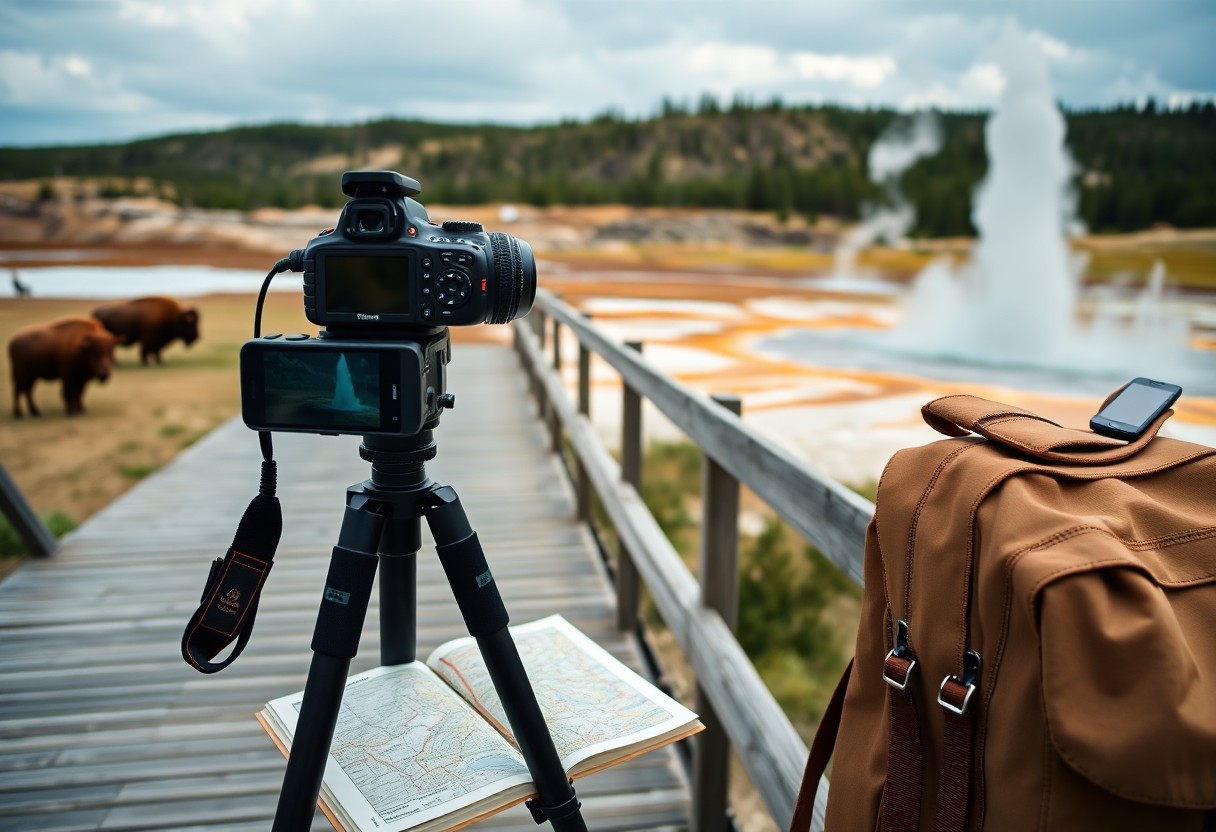
Use durable storage and quick organization to manage the hundreds of shots you’ll take each day in Yellowstone; keep two 64GB cards at minimum, an external SSD or 1TB drive for nightly backups, and geotag photos so you can map geyser shots like Grand Prismatic or Old Faithful to exact coordinates. Note lighting, time, and weather for each set, and time-stamp animal sightings to correlate behavior with location and crowd levels.
Tips for Capturing Stunning Images
Frame geothermal features and wildlife differently: use a 24-70mm for landscapes and a 100-400mm or 300mm prime for bison and elk. Lock exposure for steaming pools, bracket for high-contrast scenes near sunrise or sunset, and stabilize for long exposures at Lower Falls.
- Use a polarizer to reduce glare on thermal pools.
- Keep ISO below 800 for cleaner sky gradients.
- Shoot in RAW and bracket by ±1-2 stops around sunrise.
Assume that you carry spare batteries, a 3-stop ND, and a 300mm lens for distant wildlife.
Keeping a Travel Journal
Log time, location, weather, and gear settings for key shots-note Old Faithful’s eruption time (averaging ~90 minutes) and arrival time to compare with park crowds. Jot animal species, behavior, and estimated distance (NPS recommends 100 yards for bears/wolves, 25 yards for other animals) and include filenames so you can match entries to images later.
Use a simple template: Date/Time, GPS coordinates, Landmark, Weather (temp/wind/cloud), Camera (body, lens, settings), Subject, Distance, Composition notes, Crowd level, File names. You might record an entry like “06-12 7:14 AM, Grand Prismatic, 45.525 -110.838, overcast, f8 1/60 ISO200, polarizer, colors subdued, file IMG_4023.JPG.” Sync entries nightly to cloud and keep a local backup on an external SSD so you can delete duplicates and free cards for the next day.
Final Words
On the whole, top travel tips help you navigate Yellowstone confidently: plan your route and timing, carry layered clothing and bear spray, follow wildlife etiquette and park rules, use ranger resources, and prioritize safety and Leave No Trace practices so you can maximize sightings, minimize hassles, and make informed choices that let you experience the park like a pro.
FAQ
Q: How do seasonal travel tips help US travelers pick the best time to visit Yellowstone?
A: Seasonal tips highlight when roads and facilities are open, what wildlife is most active, and how weather affects access. Spring and fall offer fewer crowds and good wildlife viewing but some roads and services may be closed; summer has full access but heavy traffic; winter requires guided tours or snowmobile/snowcoach travel. Use seasonal advice to align your priorities-wildlife, hiking, photography, or geothermal features-with the safest and most accessible time to visit.
Q: What wildlife safety tips will help visitors view animals like a pro without disturbing them?
A: Maintain recommended distances (at least 100 yards from bears and wolves, 25 yards from bison and elk), use binoculars or a telephoto lens, stay on designated viewing areas and pullouts, never feed or approach animals, keep children close, and carry bear spray where allowed and know how to use it. Planning wake-up and travel times around dawn/dusk increases chances of sightings while reducing human-wildlife conflict.
Q: How can tips for exploring geothermal features improve safety and photo opportunities?
A: Follow boardwalks and posted warnings to avoid fragile ground and scalding water. Visit popular basins early morning or late afternoon for softer light and fewer people, and use a tripod and neutral settings for steam and long exposures. Avoid tossing objects into features, and consult updated park alerts for temporary closures or hazards to keep both you and the features protected.
Q: Which logistical tips make navigating Yellowstone’s roads, entrances, and lodging easier?
A: Check the park’s road status and active alerts before departure; plan routes along the Grand Loop with flexibility for wildlife-related stops and delays. Book lodging or campgrounds well in advance, know primary entrances and alternate routes, start drives early to avoid midday crowds, and carry printed maps and offline GPS because cell service is limited inside the park.
Q: What should US travelers pack and prepare to experience Yellowstone like a pro?
A: Pack layered clothing for rapid temperature changes, sturdy waterproof footwear, rain gear, sun protection, refillable water bottle, snacks, binoculars, camera with extra batteries and memory, and a basic first-aid kit. Include bear spray and learn to use it, bring microspikes for icy conditions in shoulder seasons, and download park maps and the NPS app for alerts and ranger program schedules to maximize safety and educational opportunities.