

Many assume full-time travel needs big budgets, but you can sustain your travel lifestyle on $1,200/month by learning predictable budgeting, low-cost accommodation, remote income strategies, and local cost hacks; this straightforward, step-by-step guide shows you exactly how to plan, cut expenses, and build reliable income streams so you start traveling confidently even without prior experience.
Key Takeaways:
- Breaks down a concrete $1,200/month budget into accommodation, food, transport, insurance, and a buffer so the number feels attainable.
- Removes the “no experience” barrier with entry-level steps: how to find remote income, travel-friendly gigs, and simple booking tactics anyone can use.
- Delivers a step-by-step roadmap-monthly budget template, income checklist, and daily travel routines-to maintain stability while on the move.
- Highlights high-impact cost strategies and destination choices: long-stay discounts, affordable digital-nomad hubs, seasonal timing, and low-transport cities to maximize value.
- Includes safety nets and scaling options: emergency-fund rules, basic insurance guidance, and clear ways to grow income for long-term sustainability.
Types of Full-Time Travel
You can choose radically different rhythms: fast-budget hopping, slow-stay immersion, vehicle-based living, work-for-stay programs, or remote-work life, each with concrete cost patterns and trade-offs-hostels at $5-15/night in SE Asia, monthly apartments $250-500 in secondary cities, van conversions costing $5k-15k upfront. Any of these styles can be tailored to a $1,200/month plan by adjusting pace, destination, and income strategy.
- Backpacking
- Digital Nomadism
- Slow Travel (monthly rentals)
- Vanlife / RV
- Work exchange / Volunteering
| Backpacking | Low nightly cost; $400-900/month depending on region |
| Digital Nomadism | Remote income + coworking fees; $700-1,200/month |
| Slow Travel | Monthly rentals reduce per-night cost; $500-1,000/month |
| Vanlife / RV | Variable: low monthly outlay but high upfront (van $5k+) |
| Work Exchange | Accommodation in exchange for work; net cost $100-600/month |
Backpacking
You move frequently, stringing together cheap hostels, buses, and street food to stretch $1,200: expect $5-15/night hostels, $3-10 street meals, and $20-50 regional bus rides; in Thailand or Vietnam many backpackers live on $400-700/month by staying in dorms, cooking occasionally, and limiting flights to one every 2-3 months.
Digital Nomadism
You earn remotely while basing in low-cost hubs: coworking memberships run $50-150/month, reliable apartments $250-600/month in Chiang Mai or Medellín, and local SIM/data $10-30; with steady clients you can reliably target a $1,200/month lifestyle by choosing the right city and work setup.
You scale this by following clear steps: secure at least $1,200/month in recurring remote income (example: two retainer clients at $600 each), pick a hub where one-bedroom rentals run ≤$400, budget $60 for coworking and $70 for insurance/health, and keep a $500 emergency buffer; practical examples include Chiang Mai (avg rental $300) and Medellín (co-working $80), and you should verify visa rules and 10-30 Mbps internet before committing.
Essential Tips for Budget Travel
Stretch $1,200 monthly by splitting it: roughly $400 lodging, $300 food, $200 transport, $200 experiences, $100 buffer. You optimize by booking weekly stays with hostels or Airbnb to get 20-40% discounts, cooking three dinners per week, and using buses instead of flights. Use local SIMs (~$10/month) to hunt deals and track spending with a simple spreadsheet. After you set those caps, review expenses every 3-5 days to stay on track.
- Book weekly/monthly rates for 20-40% savings
- Cook 3-4 nights a week to cut food costs by ~50%
- Use buses/trains and regional budget airlines for transport
- Do work exchanges (Workaway) for free lodging in exchange for ~20 hrs/week
- Track spending daily with a simple spreadsheet or app
How to Find Cheap Accommodation
Target monthly rates: in Southeast Asia expect $150-400 for private rooms, in Latin America $250-600 depending on city. You secure best rates by asking hosts for weekly/monthly discounts (save 20-40%), booking off-peak, or offering multi-week payments upfront. Consider hostels with private rooms, sublets on Facebook groups, or work exchanges (trade ~20 hours/week for room and board) and always check Wi‑Fi speed and recent reviews before committing.
Affordable Food Options on the Road
Street food often costs $1-3 in Asia and $2-6 in Latin America; you can halve food expenses by cooking 3-4 nights weekly and buying staples at markets ($15-40/week). Hunt lunch specials ($2-5), use local bakeries for cheap breakfasts, and carry snacks to avoid tourist prices. Focus on hygiene and portion control so you save without risking illness that would blow your budget.
Start by planning a weekly menu: buy rice, eggs, seasonal vegetables and one protein-expect $15-25/week in many cheap regions, translating to ~$60-100/month vs. $200+ eating out. Use hostel kitchens for batch cooking, freeze portions if possible, and join locals at food courts where dishes cost $1-4. Use grocery apps, split bulk buys with roommates, and swap meals with fellow travelers to cut your monthly food bill by roughly 50-70%.
Step-by-Step Guide to Planning Your Journey
| Creating a Travel Budget |
Break $1,200/month into clear buckets: $400 accommodation, $300 food, $200 transport, $200 activities, $100 buffer. You lower costs immediately by booking monthly rentals, house-sitting, or cooking-examples: long-term hostels drop nightly rates by 30-50% in SE Asia. |
| Itinerary Planning |
Choose one region per 1-3 months, limit moves to 2-4 per month, and use night buses/trains to save on a night of lodging. You can string cheap segments (under $50) together-e.g., Bangkok→Chiang Mai→Hanoi-using budget carriers and overland legs. |
Creating a Travel Budget
Allocate $1,200 into specific lines so you know what to cut: $400 lodging, $300 food, $200 transport, $200 experiences, $100 emergency. You shave costs by choosing countries with $20-30/day living costs, negotiating monthly stays, and cooking twice daily; a concrete plan removes the “I can’t afford it” objection.
Itinerary Planning
Start by picking one region and blocking 2-6 weeks per place to reduce transport frequency; aim for 2-4 moves monthly and prioritize slow over rapid hops. You use night buses/trains to save on accommodation and book 30-60 days ahead for intra-region budget flights.
Plan routes that minimize backtracking: sequence cities along a logical corridor (example: Lisbon→Seville→Madrid, or Bangkok→Chiang Mai→Luang Prabang→Hanoi), compare bus vs. budget flights with Rome2rio/Omio, and factor in travel time-three 1-2 hour hops beat one expensive overnight flight. You’ll cut costs by choosing longer stays where weekly/monthly rates apply and reserving short stays in pricier hubs.
Key Factors to Consider Before Traveling Full-Time
Before committing to full-time travel, you should verify visa lengths, seasonal price differences, and local cost-of-living to match the $1,200/month plan ($400 lodging, $300 food, $200 transport, $200 experiences, $100 buffer). Compare concrete examples-Chiang Mai rentals at $200-$350/month vs Lisbon short-term stays rising ~30% in summer-and check mobile data speeds in places you’ll stay longer. Recognizing visa lengths, seasonal price swings of 20-50%, and local internet reliability lets you adjust your $1,200 plan before you go.
- Budget mix: where to trim-short-term rentals vs monthly rates.
- Visa length and extension costs for 30-90+ day stays.
- Seasonal pricing: expect 20-50% spikes in peak months.
- Internet reliability and coworking availability for remote work.
- Local healthcare costs and proximity to hospitals.
- Safety trends and neighborhood crime data for long stays.
- Language barriers and cash vs card acceptance.
- Transport hubs and flight frequency to minimize repositioning costs.
Safety and Health
You must secure travel insurance that covers medical evacuation and inpatient care; expect $30-70/month depending on age and coverage level. Check CDC or local health advisories for required or recommended vaccines (e.g., hepatitis A, typhoid) and pack prescription backups. Keep a small first-aid kit, digital and paper copies of medical records, and a list of nearby hospitals so you can act quickly if illness or injury hits.
Packing Essentials
Pack for adaptability with a 40L carry-on: a lightweight down jacket, two pairs of shoes, a 20,000 mAh power bank, universal adapter, quick-dry towel, compact first-aid kit, and a waterproof phone pouch. Limit clothing to 8-10 mix-and-match pieces you can layer and wash locally, and aim to keep your bag within typical carry-on weight limits (7-10 kg) to avoid checked-bag fees.
Use packing cubes to compress and organize, roll clothes to save space, and limit shoes to two pairs-wear the heavier pair on flights. Weigh your bag at home since a single overweight fee ($50-$100) can wipe out several days of food budget; store your scanned documents in encrypted cloud storage and carry paper copies in a waterproof sleeve for quick access.
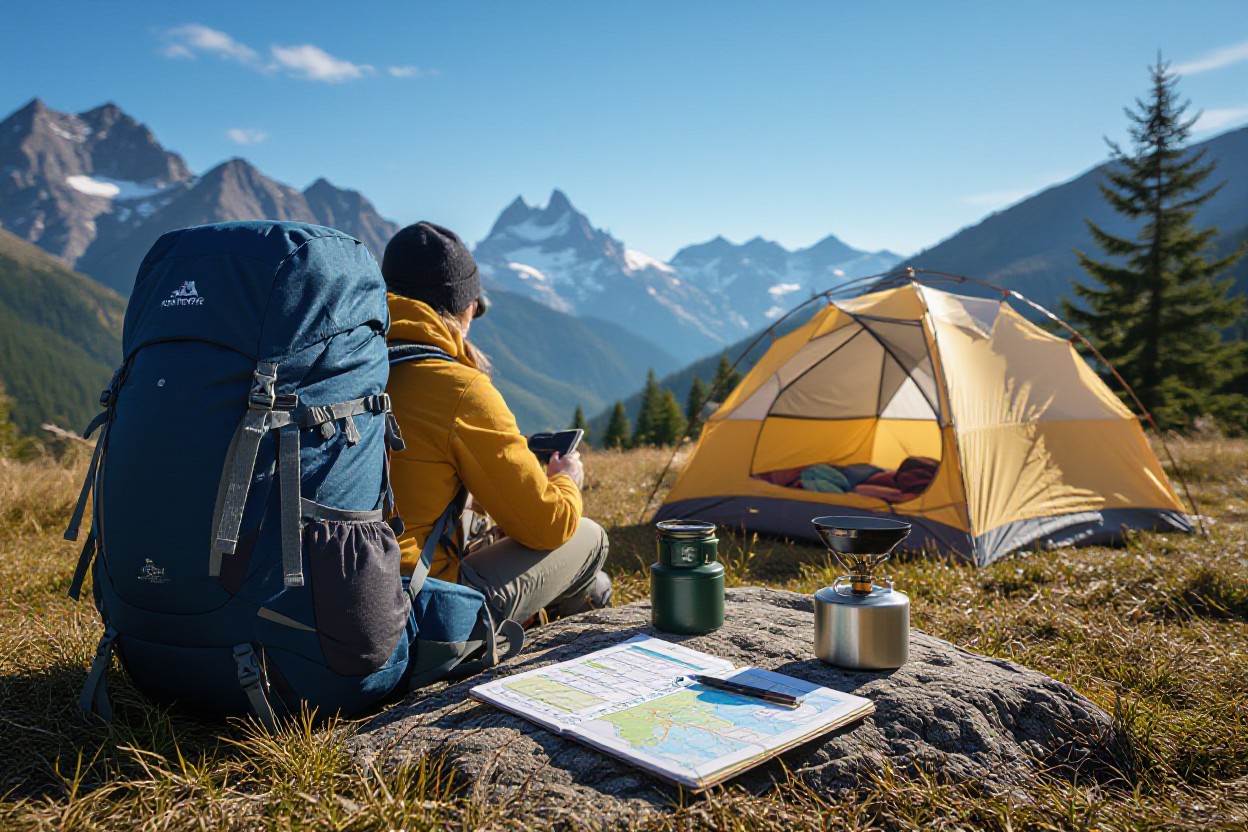
Pros and Cons of Full-Time Travel
Weighing trade-offs helps you decide if full-time travel fits your $1,200/month plan: some choices boost savings and life experience, while others add paperwork, variable costs, and social strain. Use concrete budgets, month-long rentals, and a buffer to tilt the balance toward stability without sacrificing mobility.
| Pros | Cons |
|---|---|
| Lower living costs You can find monthly rooms for $200-400 in places like Chiang Mai or Medellín, freeing cash for experiences. |
Income requirement Sustaining $1,200/month often means remote work or freelance income, which can take 1-3 months to stabilize. |
| Flexibility You pick destinations by season and price, hopping where rent and food drop. |
Visa limits Tourist stays commonly run 30-90 days, so you’ll manage renewals or apply for longer visas. |
| Cultural immersion Longer stays let you learn language basics and local routines, not just tourist spots. |
Homesickness Frequent moves can strain relationships and create loneliness if you don’t build local routines. |
| Minimalism Fewer possessions reduce costs and decision fatigue. |
Logistics Mail, tax filings, and healthcare require systems like virtual mailboxes and international insurance. |
| Networking Coworking spaces and meetups accelerate career and friendship-building. |
Unstable internet Bandwidth and reliability vary; some towns need backup SIMs or coworking passes. |
| Experience variety You sample food, festivals, and landscapes cheaply across regions. |
Hidden expenses Flights, visas, and tourist fees can spike monthly spend without planning. |
| Faster savings for travel Living where costs are lower stretches your $1,200 further for more travel. |
Healthcare gaps Local clinics differ; comprehensive travel insurance often adds $30-100/month. |
| Skill growth You learn budgeting, planning, and adaptability-marketable soft skills. |
Burnout risk Constant transitions and juggling work/travel can lead to fatigue without rest periods. |
Advantages of Traveling Full-Time
You can reduce living costs dramatically by prioritizing monthly rentals and regional hubs: using $400 for accommodation plus $300 for food in your $1,200 budget lets you target places where those buckets go further-think $200-350/month rooms in Southeast Asia or parts of Latin America-while gaining language skills, a global network, and experiences that compound into better remote-work opportunities.
Challenges to Anticipate
You’ll face paperwork, visa timing, and variable costs that can wreck a tight budget: expect 30-90 day tourist limits in many countries, occasional $200-500 flights for repositioning, and the need for travel insurance around $30-100/month depending on coverage and age.
Mitigate these by planning three-month itineraries, using monthly rental discounts, and automating finances. Keep an emergency fund equal to 1-2 months of expenses, use virtual mail services and a local SIM for reliable connectivity, and compare digital-nomad visa options (Portugal, Estonia, Mexico) when you need longer stays. These operational fixes turn common pitfalls into manageable overheads rather than deal-breakers.

Resources for New Travelers
Tap a compact toolkit-booking sites, money apps, and community platforms-to keep your $1,200/month realistic and repeatable. Use 3-4 apps together, compare nightly rates over two weeks, check Nomad List’s cost snapshots for 1,000+ cities, and pair one housesit or work-exchange option with short-term rentals to protect your accommodation budget.
Helpful Websites and Apps
Skyscanner and Rome2rio map cheap routes and multi-leg options, Booking.com and Hostelworld expose budget to midrange stays, and Nomad List gives monthly cost benchmarks. For money, use Wise or Revolut to cut FX fees and XE for quick conversions. Combine at least three tools-flights, land transport, and lodging-to reliably hit your $400 accommodation target.
Community and Support Networks
Local Facebook groups, Reddit communities like r/digitalnomad, Couchsurfing, Workaway and Meetup connect you to hosts, short gigs, and on-the-ground tips. Join 3-5 destination-specific groups before arriving and post your dates-this often unlocks couch offers, roommate leads, and real-time bargains that help keep your monthly spend within the $1,200 plan.
Actively message about 10 hosts or members across platforms, secure one housesit to replace a typical $400 lodging month, and attend two meetups in your first week to build contacts who share discounted food, rides, or side gigs. Track replies in a simple spreadsheet; many travelers cut accommodation and meal costs by 30-60% within two months using this network-first approach.
Summing up
Hence you can travel full-time on $1,200/month by combining remote income, strategic location choice, and disciplined budgeting of your funds; this step-by-step plan shows how to secure low-cost accommodation, earn reliable money, trim nonvitals, and manage visas and safety so you can act now even with zero travel experience.
FAQ
Q: How do I actually make $1,200/month cover full-time travel costs?
A: Build a strict monthly budget, then stack low-cost housing, local living habits, and remote income. Sample allocation: housing $350, food $200, transport $100, health/insurance $80, SIM/internet $30, visas/fees $50, activities $100, savings/emergency $150, misc $140 = $1,200. Cut costs by booking monthly stays, cooking with local ingredients, using public transport or bike, and avoiding tourist restaurants. Boost income with part-time remote work (see next Q) so you don’t rely only on savings. Track expenses daily with a simple app and reassess every month to stay within the $1,200 cap.
Q: I have zero travel experience-how can I earn remote income quickly enough to sustain this?
A: Start with high-demand, low-barrier remote options: online English tutoring (no degree required for many platforms with a short TEFL), microfreelance tasks (data entry, transcription, simple graphic work on Fiverr/Upwork), virtual assistant work, and customer support/chat roles. Concrete steps: 1) Pick one platform, create a focused profile, and publish 3-5 sample gigs; 2) Complete 1-3 free short courses (many platforms offer free certificates); 3) Apply to 10 targeted gigs per day using a short pitch template; 4) Deliver 1-2 strong early jobs to build reviews. Expect earnings of $300-$900/month with 10-20 hours weekly after 2-6 weeks of active applications. Combine two income streams (e.g., tutoring + microtasks) to smooth variability.
Q: Which destinations let me live comfortably on $1,200/month and how do I choose between them?
A: Choose countries with low rents, cheap food, and affordable healthcare. Good options: Southeast Asia (Thailand, Vietnam, Cambodia) – monthly rents $150-400 in smaller cities; Latin America (Mexico, Guatemala, Colombia) – $250-500 in non-tourist towns; Eastern Europe (Georgia, Bulgaria, Romania) – $250-500; parts of India – $150-400. Pick a base city with reliable internet, affordable coworking if needed, and visa flexibility. Avoid peak tourist seasons and touristy neighborhoods. Check visa length and ease of extension before committing: many low-cost countries allow 30-90 day stays, some offer longer digital-nomad or residence options you can leverage to reduce visa churn.
Q: How do I handle health, safety, and unexpected costs while on such a tight budget?
A: Maintain a small dedicated emergency fund (at least 2 months of expenses; $2,400 recommended) and a basic travel insurance plan that covers evacuation and common medical care (options include SafetyWing, World Nomads or affordable local insurance). Keep digital and printed copies of passport/insurance/contacts, set up an emergency contact, and register with your embassy if recommended. Use local clinics for non-emergency care, and verify costs before treatment. Keep one credit card for emergencies and one debit card with low foreign-transaction fees. Regularly transfer a portion of income into a savings buffer to avoid draining your emergency fund.
Q: What logistics and daily routines help this lifestyle scale and stay sustainable long-term?
A: Create routines: weekly expense reviews, monthly visa planning, and quarterly destination reassessments. Automate bill payments where possible, use a budgeting app, and maintain a lightweight gear list to avoid baggage fees and theft risk. Optimize bank setup: a primary account with low fees, a backup card, and a low-cost global payment app. Build local networks (coworking spaces, Facebook groups) for housing swaps and tip-sharing. Plan tax filing at home if required and keep receipts. Gradually increase remote income skills (e.g., one paid course every 3-6 months) so you can expand savings, reduce working hours, or move to slightly higher-cost but safer locations when needed.



2 thoughts on “How to Travel Full-Time on $1,200/Month (Even With Zero Travel Experience)”
Comments are closed.