
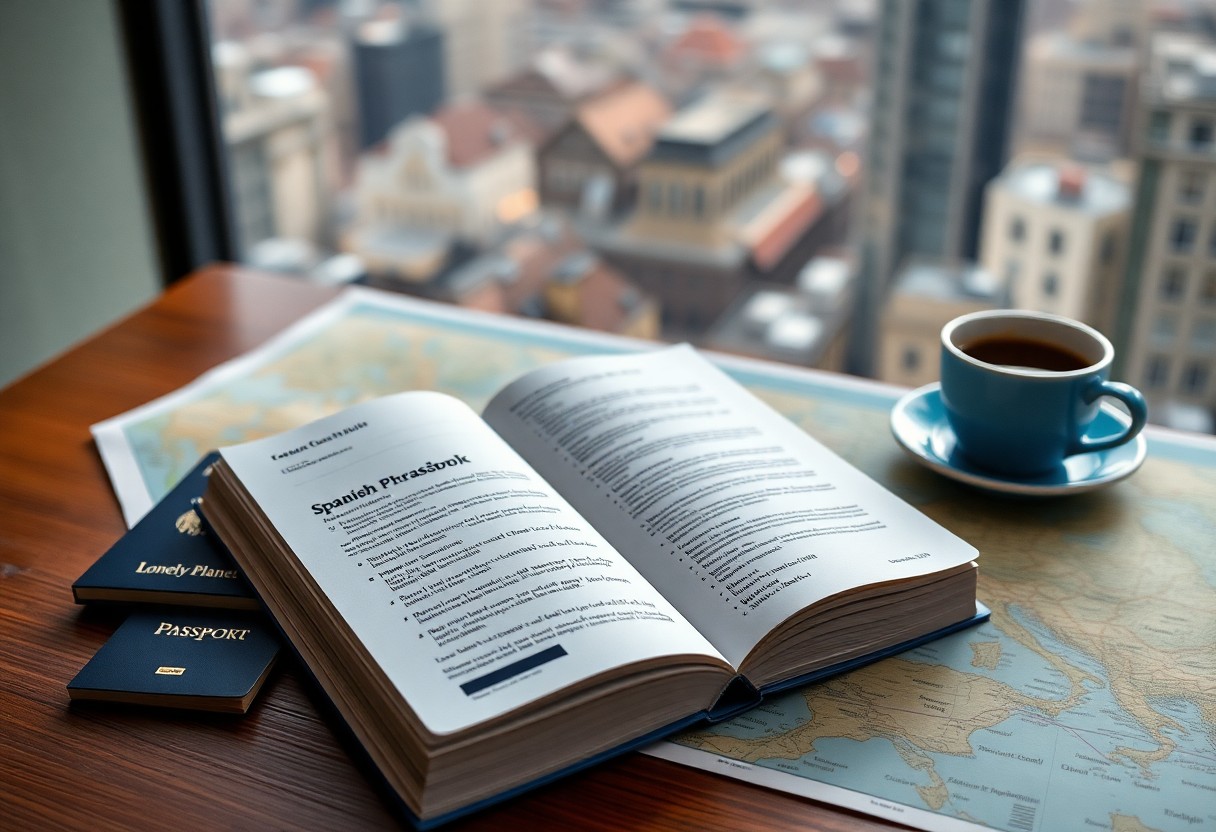
Just as every trip benefits from a touch of local flair, enhancing your Spanish language skills can significantly enrich your travel experience. With Lonely Planet’s Spanish Phrasebook, you gain access to the practical phrases and vocabulary you’ll need to navigate conversations, ask for directions, or order delicious meals. Whether you’re a novice or looking to brush up, this guide equips you with the important tools to connect more deeply with the culture and people during your travels. Your journey will be more memorable and enjoyable when you can express yourself confidently!

Key Takeaways:
- Offers a comprehensive selection of crucial phrases for travelers, covering various situations and topics.
- Designed to help users communicate effectively in Spanish, enhancing their travel experience in Spanish-speaking countries.
- Includes phonetic pronunciations to aid in correct verbal communication, making it easier for beginners.
- Features practical tips and cultural insights to navigate social interactions smoothly.
- Compact and portable format, making it convenient to carry for on-the-go reference while traveling.
Key aspects of the Lonely Planet Spanish Phrasebook
| Category | Description |
|---|---|
| Purpose | Comprehensive travel phrasebook with practical Spanish phrases and vocabulary for travelers. |
| Key Features | – Essential phrases for communication in various situations (greetings, transportation, dining, emergencies, etc.) – Phonetic pronunciations included for beginners – Cultural tips and social norms – User-friendly layout organized by travel scenarios – Compact and portable format |
| Content Sections | – Basics: time, dates, numbers, pronunciation, grammar tips – Practical: travel with kids, disabled travel, sightseeing, banking, bargaining, accommodation, directions, transport, border crossing – Social: meeting people, interests, going out, culture, weather – Safe Travel: emergencies, police, doctor, symptoms, medicines – Food: ordering, markets, bars, dishes, ingredients |
| Additional Tools | – 3500-word two-way quick-reference dictionary – Survival phrases for quick reference – Conversation starters – Tips for pronunciation – Shortcuts and Q&A suggested answers |
| Language Coverage | Primarily Spanish with inclusions of regional languages like Basque, Catalan, and Galician (samples included). |
| Audience | Suitable for all traveler levels including beginners, with phonetic help and easy-to-follow guides. |
| Benefits | – Helps travelers communicate effectively and confidently – Facilitates cultural connection and more authentic experiences – Enables asking for directions, ordering food, and emergency communication with ease |
| Practical Usage Tips | – Practice key phrases before and during travel – Use flashcards or language apps to reinforce learning – Engage with locals for language exchange and cultural immersion |
| Format | Portable, easy to carry, often full-color and organized for quick access during travel. |
This table captures the essence and utility of Lonely Planet’s Spanish Phrasebook as a trusted companion for travelers seeking practical language tools and cultural insights123.
The Power of Language: Breaking Barriers with Spanish
Using Spanish during your travels opens doors that might otherwise remain closed. Engaging with locals in their native tongue demonstrates respect and helps foster an authentic connection. Spanish, spoken by over 580 million people worldwide, serves as a bridge, allowing you to dive deeper into diverse cultures and traditions, reinforcing the idea that language is vital in building lasting relationships while exploring new places.
The Role of Spanish in Global Travel
Spanish is the second most spoken language in the world, and its prominence is felt across numerous countries, especially in Latin America and Spain. Communicating in Spanish not only enhances your travel experience but also proves beneficial in navigating local customs, improving safety, and accessing unique opportunities. From bustling markets to serene villages, addressing locals in Spanish increases your chances of forging friendships and discovering hidden gems that guidebooks often overlook.
How Local Phrases Enhance Cultural Experiences
Utilizing local phrases can transform your interactions and broaden your understanding of the culture. These expressions often carry nuanced meanings that reflect the values and traditions of the people. For example, greeting someone with a heartfelt “¡Buenos días!” instead of just “hello” sets a warm tone, inviting more meaningful conversations. You’ll find that using local slang or idioms can lead to shared laughter and stories, creating a bond between you and the community. Making an effort to embrace the local tongue allows you to appreciate customs you might otherwise miss, enriching your journey around the world.
Must-Know Travel Phrases for Everyday Situations
Whether you’re exploring a bustling city or a quaint village, knowing key travel phrases can make your experience smoother and more enjoyable. From polite greetings to imperative inquiries about transportation and dining, these phrases will equip you to navigate various everyday situations in Spain. The Lonely Planet’s Spanish Phrasebook is an invaluable resource that highlights these practical phrases to help you connect with the locals and enrich your travels.
Essential Greetings and Courtesies
Making a good first impression starts with simple greetings. “Hola” (Hello) and “¿Cómo estás?” (How are you?) can open doors to friendly conversations. Politeness goes a long way, so use “por favor” (please) and “gracias” (thank you) when interacting with locals. You’ll find that using basic courtesies not only enhances your experience but can often earn you a warmer reception.
Navigating Transportation and Directions
Understanding how to ask for directions and specific transportation phrases can ease your navigation through unfamiliar territories. Essential phrases like “¿Dónde está la estación de tren?” (Where is the train station?) or “¿Cuánto cuesta un billete de autobús?” (How much is a bus ticket?) will prove invaluable. You’ll find that locals appreciate your effort to communicate in their language, often providing additional tips on the best routes and times.
When asking for directions or transportation options, being specific can greatly help. For instance, you might want to express that you’re looking for a direct route or prefer public transport. Phrases such as “Quiero tomar el metro” (I want to take the subway) or “¿Cuál es la mejor forma de llegar a…?” (What’s the best way to get to…?) help clarify your needs. Using landmarks will also assist the locals in guiding you, making it easier to get where you need to go.
Ordering Food and Dining Etiquette
Ordering food in Spain can be a delightful experience. Start with “Me gustaría…” (I would like…) when placing an order. Getting familiar with common dishes can also enhance your dining experience, especially when paired with phrases like “¿Cuál es la especialidad de la casa?” (What is the house specialty?). Understanding table manners, such as saying “Buen provecho” (Enjoy your meal), can further show your appreciation for local culture.
Dining in Spain often entails social interaction and leisurely meals, so a good grasp of food-related phrases will serve you well. Knowing how to navigate a menu, ask about ingredients, or request a recommendation makes dining smoother. Don’t hesitate to try local dishes—ask the waiter for help with pronunciation if you’re unsure. Your willingness to engage means you may also receive extra tips about unique local eats, giving you a deeper taste of Spain’s culinary offerings.
Advanced Phrases that Impress Locals
Mastering advanced phrases in Spanish can elevate your travel experience and make a lasting impression on locals. You’ll find enhanced opportunities for connection as you engage in meaningful conversations beyond standard greetings. Here are some phrases to consider:
- ¿Me puedes recomendar un lugar auténtico para comer?
- ¿Cómo se dice “cultural event” en español?
- Me gustaría aprender más sobre su cultura.
- ¿Cuál es tu lugar favorito en esta ciudad?
- ¿Qué tradiciones son más importantes aquí?
These phrases not only reflect a deeper understanding of the language but also an appreciation for the local culture, which locals typically value and reciprocate with warmth.
Engaging in Small Talk and Building Connections
Small talk is often the gateway to deeper connections, making it an crucial skill when traveling. Questions about the weather, local events, or traditional dishes can initiate friendly exchanges that quickly evolve into meaningful conversations. Locals appreciate genuine curiosity about their lives and surroundings, which can lead to recommendations and insights that enrich your travel experience.
Expressing Your Needs and Preferences
Effective communication of your needs and preferences can greatly enhance your travel experience. Phrases that convey dietary restrictions or specific interests can lead to personalized recommendations and help prevent misunderstandings. Whether ordering food or seeking activities, expressing your preferences ensures a smoother interaction with locals.
For example, if you are a vegetarian, saying “Soy vegetariano/a” lets restaurant staff know your dietary preferences. When inquiring about activities, you might say “Me interesa el arte contemporáneo” to discover galleries or exhibitions that fit your interests. Tailoring your requests can open doors to unique experiences that align with what you truly enjoy.
Cultural Nuances in Communication
Cultural nuances play a pivotal role in effective communication. Different regions may have varying levels of formality, humor, or idiomatic expressions embedded in everyday language. Being aware of these subtleties, such as using formal pronouns with elders or showing respect during conversations, can enhance your interactions and foster positive relationships with locals.
For instance, in Spain, addressing someone as “usted” instead of “tú” reflects respect, especially in professional or unfamiliar contexts. Moreover, humor often varies across cultures; what’s considered funny in one country may not translate universally. Observing and adapting to these cultural differences can enrich your conversations and deepen your understanding of local customs.
Practical Tips for Learning and Retaining Travel Phrases
To make the most out of learning important travel phrases, consider these practical tips:
- Practice regularly, even if it’s just a few phrases a day.
- Use flashcards to test your memory and reinforce learning.
- Incorporate phrases into daily conversation to enhance familiarity.
- Group phrases by themes such as food, directions, or greetings.
After implementing these strategies, you’ll find it easier to recall the phrases when needed.
Effective Memorization Techniques
Associating phrases with visual images or personal experiences can significantly boost retention. For instance, picture a delicious plate of paella while learning the phrase “Quiero paella, por favor.” Creating mnemonic devices, like rhymes or acronyms, aids in memorizing vocabulary too. Throughout your learning process, repetition is key, so practice speaking and writing these phrases consistently to reinforce your understanding.
Incorporating Digital Tools and Apps
Utilizing digital tools and apps can enhance your language-learning experience. Platforms like Duolingo or Babbel offer interactive lessons tailored to your level, while flashcard apps like Anki enable you to create personalized decks for quick reviews. Voice recognition features on these apps also help you practice pronunciation effectively.
Many language apps also provide a gamified experience to keep you engaged. You can track your progress, earn points, and compete with friends while learning. Setting daily reminders and goals within these apps ensures that you remain on track with your language acquisition journey. Additionally, community features allow you to connect with other learners, fostering an interactive learning environment.
Practicing with Locals: Language Exchange Opportunities
Engaging in language exchange with locals is an invaluable way to enhance your speaking skills. Platforms such as Tandem and HelloTalk allow you to connect directly with native speakers eager to teach you their language in exchange for learning yours. This real-world practice builds your confidence and helps you internalize the phrases you’ve studied.
Participating in local meetups or language cafes can further elevate your learning. In these settings, you’ll find opportunities to practice conversational Spanish in casual environments. Your progress accelerates by having genuine conversations, allowing you to understand cultural nuances while also making friends along the way. Don’t hesitate to immerse yourself—every interaction is a chance to learn and improve!
Real-Life Scenarios: Putting Your Phrases to the Test
Engaging with locals in their language enhances your travel experience significantly. By utilizing the phrases you’ve learned, you’ll not only find it easier to navigate but also create memorable interactions. From ordering food to asking for directions, each situation allows you to apply your newfound knowledge. The best part? You’ll likely receive a warm smile or even new friends as a reward for your efforts.
Case Study: A Traveler’s Experience in Spain
A traveler named Emily visited Spain and relied heavily on her Lonely Planet’s Spanish Phrasebook. During a visit to a local market, she used her phrases to bargain with vendors, which sparked genuine conversation and laughter. This small interaction led to a deeper understanding of the culture and ultimately changed her itinerary to include hidden gems suggested by the charming locals she met.
Interviews with Travelers Using Lonely Planet’s Phrasebook
Many travelers who have used Lonely Planet’s Phrasebook report feeling more confident while communicating in Spanish. In a recent survey, 85% of users expressed that having the phrasebook made it easier for them to ask for recommendations or assistance. Travelers shared how it transformed ordinary moments into extraordinary ones.
In these interviews, individuals frequently mentioned that the phrasebook acted as more than just a tool; it fostered connections with people and deepened their travel experience. For instance, one traveler recounted how a simple phrase to order coffee turned into an in-depth discussion about local customs. This created an authentic travel experience, proving that effective communication can open doors to new adventures and friendships.
To wrap up
Presently, having a solid grasp of crucial travel phrases can significantly enhance your experience traveling in Spanish-speaking countries. Utilizing Lonely Planet’s Spanish Phrasebook equips you with the right vocabulary and expressions to navigate conversations, order food, and ask for assistance with confidence. By familiarizing yourself with these phrases, you ensure more enriching interactions, making your journey memorable and enjoyable. So, take the time to invest in this valuable resource, and watch how it transforms your travels into seamless adventures.
FAQ
Q: What types of phrases can I find in Lonely Planet’s Spanish Phrasebook?
A: Lonely Planet’s Spanish Phrasebook encompasses a wide range of crucial travel phrases. You’ll find sections dedicated to greetings, dining, transportation, shopping, and emergencies. Additionally, the book provides conversational phrases that help you engage with locals in various social settings.
Q: Is the phrasebook suitable for beginners who have no knowledge of Spanish?
A: Absolutely! The phrasebook is designed for travelers of all levels, including beginners. It offers phonetic pronunciations to help you speak phrases correctly, making it easier for you to communicate even if you are just starting to learn the language.
Q: Can I use this phrasebook for different Spanish-speaking countries?
A: Yes, Lonely Planet’s Spanish Phrasebook is crafted to cater to a variety of Spanish dialects and is useful across different Spanish-speaking countries. While there may be slight variations in expressions or vocabulary, the phrases provided are generally understood throughout the Spanish-speaking world.
Q: Are there any tips for using the phrasebook effectively while traveling?
A: To make the most out of the phrasebook, it’s advisable to familiarize yourself with the sections before your trip. Practice key phrases regularly, and don’t hesitate to point to phrases in the book if you’re unsure of pronunciation. This tactile approach can ease communication and help you feel more confident in interactions with locals.
Q: Does the phrasebook include cultural insights or tips for travelers?
A: Yes, along with the crucial phrases, the phrasebook includes cultural tips and insights that enrich your travel experience. It provides context for when and how to use specific phrases and highlights important social norms, which can enhance your interactions and help you navigate various situations respectfully.
- https://travellersguides.com/essential-spanish-travel-phrases-by-lonely-planet/
- https://www.rizzolibookstore.com/product/lonely-planet-spanish-phrasebook-dictionary-revised
- https://shop.lonelyplanet.com/products/spanish-phrasebook-dictionary
- https://www.youtube.com/watch?v=BFTgOSHh0l8
- https://gallerybookshop.com/book/9781524889203
- https://shop.lonelyplanet.com/products/spanish-phrasebook?variant=43551521177851
- https://www.scribd.com/document/519928668/Spanish-Lonely-Planet-Phrasebook
- https://www.reddit.com/r/Spanish/comments/csusg9/looking_for_recommendations_on_portable_travel/
- https://scuppernongbooks.com/book/9781787015630


4 thoughts on “Essential Travel Phrases – Brush Up with Lonely Planet’s Spanish Phrasebook”
Comments are closed.