Rentals can significantly affect your vacation experience, especially when choosing between platforms like Airbnb and VRBO. Understanding the fee structures and host advantages on each platform is important for maximizing your investment and ensuring a pleasant stay. This comparison will guide you through the nuances of each service, helping you make informed decisions about your vacation rental options and enabling you to optimize both costs and benefits.
Key Takeaways:
- Airbnb typically charges a service fee of 6-12% to guests and hosts 3% per booking.
- VRBO has a one-time service fee for guests, often ranging from 6-12%, and charges hosts a 5% fee.
- Airbnb offers more comprehensive guest protection policies compared to VRBO.
- Hosts on Airbnb can access a larger audience due to its widespread popularity.
- VRBO caters more to family and group travelers, emphasizing entire home rentals.
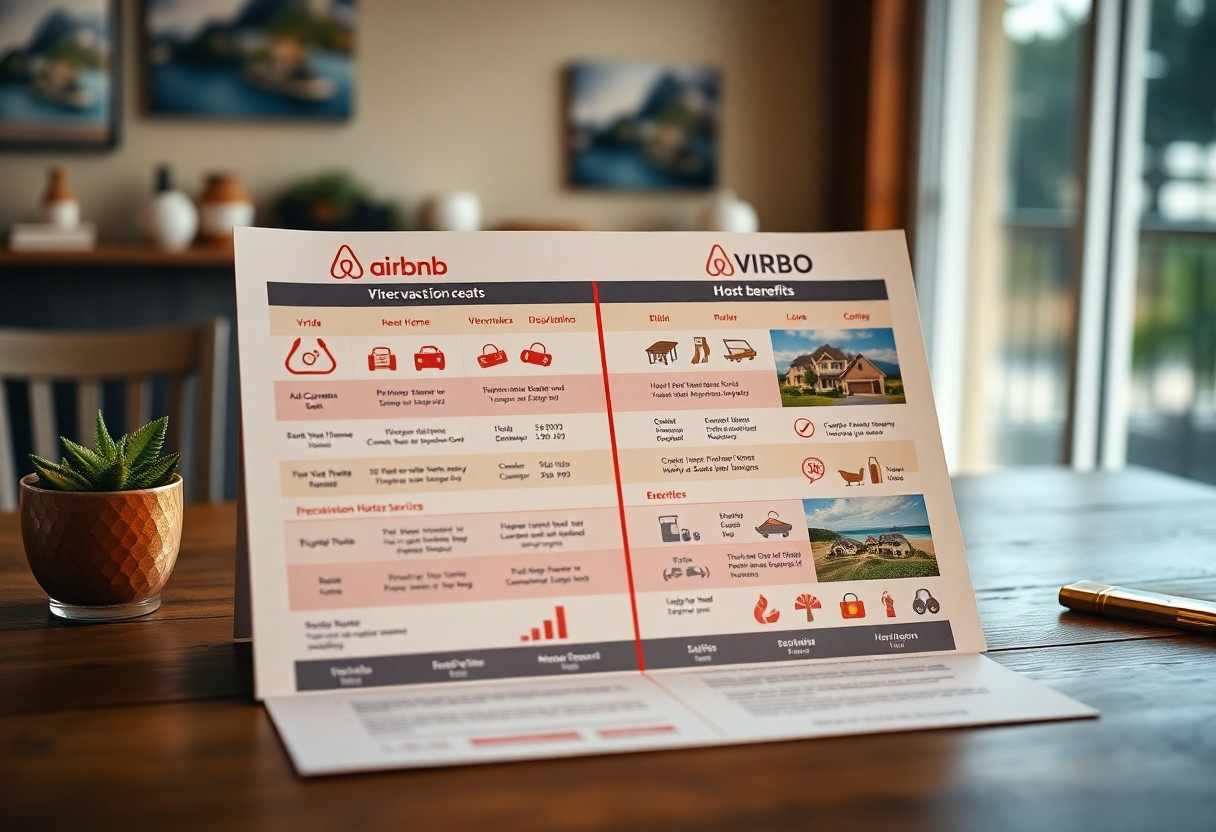
Overview of Airbnb and VRBO
Airbnb and VRBO are two leading platforms in the vacation rental industry, each catering to different audiences and experiences. Airbnb emphasizes unique accommodations, from apartments to treehouses, appealing to travelers seeking diverse options. In contrast, VRBO focuses on whole-home rentals, ideal for families and larger groups looking for comfort and privacy. Both platforms offer users the ability to book properties in various locations worldwide, providing a range of choices to suit any travel style.
Company Histories
Airbnb was founded in 2008 in San Francisco, starting as a platform for sharing space in the co-founders’ apartment during a conference. The idea quickly gained traction, leading to rapid growth and expansion into various markets. VRBO, established in 1995, began as a site for listing vacation homes, primarily focused on whole-property rentals. Acquired by Expedia Group in 2015, VRBO has targeted vacationers seeking family-friendly rentals, solidifying its position in the market.
Market Positioning
Airbnb positions itself as a versatile option for travelers seeking unique local experiences, catering to both short stays and long-term rentals. It emphasizes community, cultural exchange, and personalized stays, often appealing to younger, adventurous demographics. Conversely, VRBO primarily targets families and groups looking for entire properties, promoting a home-like atmosphere with amenities that suit larger parties. The market positioning reflects distinct priorities, influencing how you might choose between the two platforms based on your travel needs.
The choice between Airbnb and VRBO often comes down to your travel preferences. If you value unique stays and a wide array of accommodations, Airbnb may suit you better. Alternatively, if you’re traveling with family or a group and prefer the comforts of a home, VRBO’s offerings might be more appealing. Moreover, Airbnb’s flexibility attracts solo travelers and couples, while VRBO’s emphasis on whole-home rentals makes it a prime choice for those requiring space and family-oriented amenities.
Fee Structures
When comparing Airbnb and VRBO, understanding the fee structures is vital for budgeting your vacation rental experience. Both platforms have distinct approaches to charging users, affecting your overall expenses as a guest or host. It’s vital to know what to expect so you can evaluate your choices effectively and get the best value for your money.
Airbnb Fees Explained
Airbnb typically charges guests a service fee ranging from 6-12% on bookings, alongside a 3% host fee per transaction. The guest service fee varies based on factors like the booking subtotal and the length of stay. This fee is clearly stated before you confirm the reservation, allowing you to see the total cost upfront.
VRBO Fee Breakdown
VRBO implements a one-time service fee for guests, which usually falls between 6-12% of the booking amount, depending on the total cost. This is in addition to any applicable taxes and fees, making it important to calculate the final price before booking. Hosts should also be aware of a listing fee, which can impact their overall earnings.
For VRBO, the one-time service fee offers transparency by allowing you to see all charges at a glance. Unlike Airbnb, where fees are ongoing per booking, VRBO’s fee is standardized, ensuring you aren’t blindsided by multiple charges. Additionally, hosts can choose to either include the fee in the rental price or pass it directly to you as a guest, giving flexibility in how the charges are presented. It’s advisable to clarify this aspect when securing your rental to avoid surprises down the line.

Host Benefits
Both Airbnb and VRBO offer distinct advantages for hosts, providing tools and features to maximize your rental income while minimizing hassle. Choosing the right platform can enhance your experience and increase your property’s visibility, ultimately benefiting your bottom line. Understanding these host benefits can help you make an informed choice that aligns with your hosting style and goals.
Airbnb Host Advantages
As an Airbnb host, you gain access to a massive global audience with millions of active users. This platform offers robust marketing tools, detailed analytics, and a user-friendly mobile app that makes managing bookings straightforward. Furthermore, Airbnb’s host support includes a 24/7 hotline and a strong community forum, allowing you to quickly access advice and resolve issues.
VRBO Host Features
VRBO primarily targets families and larger groups, which can translate to higher booking rates for whole-home rentals. This platform allows you to create custom listings with detailed descriptions, uploaded videos, and ample photo space to showcase your property. Additionally, VRBO’s focus on long-term rentals can lead to more stable income streams compared to shorter stays.
The platform provides its hosts with unique benefits, such as dedicated support tailored for whole property rentals and an annual subscription model that can lower overall fees if you list multiple properties. VRBO’s renter protection features also contribute peace of mind, ensuring that both hosts and guests feel secure during their transactions. By emphasizing family-friendly experiences, VRBO positions you as a prime choice for larger groups seeking spacious, comfortable accommodations.
Rental Property Types
When exploring vacation rental options, it’s vital to recognize the diversity of property types available. Each platform presents unique choices tailored to varying preferences and budgets.
- Single-family homes
- Condos and apartments
- Cottages and cabins
- Luxury villas
- Shared spaces or private rooms
Thou must consider the type of experience you desire when selecting a rental.
| Property Type | Common Features |
|---|---|
| Single-family homes | Space, privacy, pet-friendly options |
| Condos | Modern amenities, pools, proximity to attractions |
| Cottages | Cozy atmosphere, nature access, traditional charm |
| Luxury villas | High-end features, private pools, exclusive locations |
| Shared spaces | Budget-friendly, social interactions, local insights |
Airbnb Property Options
With Airbnb, you can choose from a vast array of property options, ranging from entire homes to unique stays like treehouses and yurts. This diversity allows you to find a perfect match for any group size or travel style, ensuring an authentic hospitality experience. Hosts often provide local tips and personalized touches to enhance your stay.
VRBO Property Selection
VRBO primarily focuses on whole-property rentals ideal for family vacations or group retreats. This emphasis on entire homes offers you a more privacy-oriented experience, making it perfect for longer stays. Properties typically feature spacious living areas, full kitchens, and outdoor amenities, creating an accommodating environment for your needs.
VRBO’s selection often includes vacation homes in renowned destinations, ensuring plenty of options that cater to families or groups seeking fun and relaxation. Properties vary in size and style, from intimate cabins in the woods to expansive beachfront villas. You’ll appreciate the convenience and comfort that come with having an entire property dedicated to your stay.
Guest Experience
The guest experience plays a pivotal role in how you select a rental platform. Both Airbnb and VRBO aim to deliver comfortable and memorable stays, yet their approach and features may appeal differently to your needs as a traveler.
Booking Process on Airbnb
On Airbnb, the booking process is straightforward and user-friendly. You can easily search for accommodations by date, location, and filter amenities, allowing you to quickly find a suitable rental. Once you select a property, you can view detailed descriptions, guest reviews, and host profiles to aid your decision.
Booking Process on VRBO
VRBO’s booking process emphasizes family and group travel, which is evident in their property listings. You can filter searches to specify entire homes, catering to larger parties. The site also displays key details, including pricing and available dates, efficiently guiding your rental choices.
When booking on VRBO, you often benefit from features such as direct communication with the owner, which can streamline arrangements. Additionally, the platform enables you to review cancellation policies and payment options upfront, ensuring you have clarity throughout the rental process. This level of transparency serves to enhance your overall booking experience, making it easy to plan your getaway according to your preferences and itinerary.
Regulatory Considerations
Understanding local regulations is imperative for both guests and hosts when using vacation rental platforms like Airbnb and VRBO. Compliance with these laws can significantly impact your rental experience, profitability, and peace of mind. As regulations vary widely across cities and regions, it’s important for you to stay informed about restrictions, taxes, and permits applicable in your specific area.
Local Laws and Regulations
Your rental activity is subject to a variety of local laws, including zoning regulations, tax obligations, and licensing requirements. For instance, cities like San Francisco have strict short-term rental laws, limiting the number of days you can rent without being a primary resident. Investigating your local laws will help you remain compliant and avoid potential fines.
Compliance Challenges
Navigating compliance can be tricky, especially as regulations frequently change and differ from one municipality to another. You may find yourself facing challenges such as obtaining necessary permits, paying transient occupancy taxes, or dealing with stricter local ordinances. Staying updated on these evolving rules is vital to protect your rental business.
Compliance challenges often arise when local governments tighten regulations in response to community concerns. For example, some cities have implemented strict limits on rental durations, requiring hosts to register with authorities. Additionally, you might encounter hurdles related to neighbor complaints or inspections, complicating your ability to operate smoothly. Failure to comply with regulations not only risks penalties but can also damage your reputation as a host.
Summing up
Summing up, when considering Airbnb versus VRBO for vacation rental fees and host benefits, you should weigh the platform’s service fees, insurance options, and potential revenue. Both platforms have distinct advantages: Airbnb typically offers greater exposure and ease of use, while VRBO focuses on vacation homes and usually charges lower host fees. Your choice should align with your hosting goals and the type of travel experience you wish to provide.
FAQ
Q: What are the primary fee differences between Airbnb and VRBO?
A: Airbnb typically charges hosts a service fee of around 3% of the booking subtotal, while guests may face a service fee between 0% to 14.2%. VRBO charges hosts a 5% commission fee on the rental amount and a payment processing fee, with guests generally paying a service fee of 6% to 12%.
Q: How do the cancellation policies compare between Airbnb and VRBO?
A: Airbnb offers flexible, moderate, and strict cancellation policies, allowing hosts to choose what suits them best. VRBO has similar options but is more prone to favor stricter conditions, potentially making it less desirable for guests seeking flexibility.
Q: What benefits do Airbnb hosts receive that VRBO hosts do not?
A: Airbnb provides hosts with a broader audience, unique community features, and various promotional tools. Additionally, Airbnb’s review system encourages more frequent guest interaction, which can lead to higher booking rates.
Q: How does support for hosts differ between Airbnb and VRBO?
A: Airbnb has a well-established support system with 24/7 customer service, extensive help documentation, and community forums. VRBO also offers support, but the overall availability and community engagement are less extensive than Airbnb’s.
Q: What are the payment processing options for hosts on each platform?
A: Both Airbnb and VRBO offer secure payment processing, but Airbnb allows hosts to receive payouts via direct deposit, PayPal, or other methods, often within a few days. VRBO also offers similar options but may have longer processing times, depending on the chosen method.